Lead singer Jordan Pundik discusses New Found Glory’s transition to becoming a four-piece, the cathartic nature of latest album Resurrection, and what still excites him about making music after 17 years.
Interview: Jordan Pundik of New Found Glory


Lead singer Jordan Pundik discusses New Found Glory’s transition to becoming a four-piece, the cathartic nature of latest album Resurrection, and what still excites him about making music after 17 years.
I can’t say Resurrection is inappropriately titled. New Found Glory’s eighth studio LP is, ugh, a ~*return to form*~ in just about every way. This always happens when the South Florida now-quartet faces some sort of adversity — they regress toward the mean. Coming Home was creative and about as daring as New Found Glory has ever gotten but it didn’t work out the way it was supposed to, so they wrote Not Without A Fight, the most polar opposite of Coming Home possible while still remaining in the very specifically defined realm of pop-punk inhabited by New Found Glory music. Now, guitarist and lyricist Steve Klein gets kicked out of the band and we get Resurrection, which is nothing more than a confirmation that yes, in fact, New Found Glory is still a band, they still exist, and yes, in fact, they can still write New Found Glory songs. Great!
Not so great is the fact that new-school pop-punk’s forefathers have regressed so far toward their own mean that they’ve essentially parodied themselves. Resurrection is significantly more enjoyable for me when I pretend it’s a band of people I don’t know jokingly writing songs pretending to be New Found Glory. This is now a band whose career is driven almost entirely by nostalgia; they draw crowds consisting of either young pop-punk fans who listen to them because they feel like they’re supposed to, or slightly older people who want to hear the hits and don’t care much for new material. That’s perfectly fine: Taking Back Sunday is currently romping across that same exact career arc, but while TBS is taking it upon themselves to change their sound, New Found Glory is retreating for whatever comes easiest. The songs on Resurrection have already been written by this band dozens of times before.
Read More “New Found Glory – Resurrection”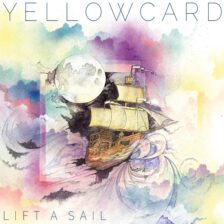
When I sat down to write this review, I found myself staring at Microsoft Word’s blinking cursor for at least 10 minutes, coming up blank. That’s not a common occurrence for me. Usually, when I write a review, it comes out fully formed, all in one sitting. But how could I review an album such as this? What could I say that would speak to the experiences of other listeners and not just my own? The struggle was born from the fact that Yellowcard’s last album, Southern Air, became one of the most personal records in my life two years ago. That album came out toward the end of summer 2012, the summer before my senior year in college. It was my last summer in my hometown, my last summer before the real world set in, and songs like “Southern Air” and “Always Summer” just felt so fitting. Suffice to say that listening to an album that ends with the line “this will always be home” is particularly resonant when you’re driving away and don’t really know where your next “home” is going to be.
Needless to say, Southern Air is my favorite Yellowcard album, and probably always will be. I connected with it like people older than me connected with Ocean Avenue back in 2003, and I was worried that, like them, I’d have to deal with a follow-up that completely misplaced the magic of its predecessor. But while Lift a Sail, Yellowcard’s latest record, is a departure from the anthemic beachside sound of the band’s last couple albums, it isn’t a departure in the same way 2006’s Lights and Sounds was. Sure, both records shift in a more “rock” focused direction, both are darker than their predecessors, and both are highly ambitious. The difference is that, where Lights and Sound was directionless and dull, Lift a Sail is the portrait of a band that has more to say right now than at any other point in their career.
Read More “Yellowcard – Lift a Sail”
Andrew McMahon explains why his new Wilderness project is the most focused thing he’s done in years, touches on the themes of storytelling and fatherhood, and unpacks his lifelong obsessions with dreams and the sky.

My relationship with Yellowcard begins over a decade ago and the musical connection and ensuing friendship now runs deeper and longer than many of my “in real life” relationships. On October 7th, 2014 the band will be releasing their most ambitious album to date, Lift a Sail. I had the chance to sit down and talk with lead singer Ryan Key about everything that went into crafting this album, the stories and inspiration behind the musical direction, and so much more.

Frontman Mike Kerr talks about the natural origins of Royal Blood, how not having a guitarist is similar to making a pizza, and what the band’s first time in the studio was like recording their debut.

I still remember the first time I heard American Idiot in full. It was my 14th birthday, and I’d been waiting for the better part of two months to finally give the album a spin. The record dropped on September 21, but as was the norm when I was young, broke, and trying to cut back on downloading, I often had to wait awhile to buy CDs or ask for them as gifts. Such was the case with Green Day’s first full-length album in four years, which I scrawled on my birthday list between other 2004 albums like Keane’s Hopes and Fears and Sister Hazel’s Lift.

Jean-Philip Grobler chats about his lifelong musical journey, from a boys choir in South Africa to commercial writing in New York City to then starting St. Lucia, as well as the tension of his ‘80s influences and what his version of perfection sounds like.

Kimbra discusses the unusual influences behind her second record The Golden Echo, why songwriting is like making a tapestry, and the importance of balancing the technical with the creative.
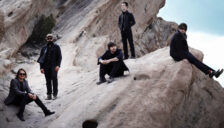
Guitarist Randy Strohmeyer talks about reuniting for Finch’s first album in over nine years, why he doesn’t like What It Is to Burn being referred to as nostalgic, and how the band always tries to keep things mysterious and tongue in cheek.

Frontman Adam Duritz shares how Counting Crows were reenergized on the new album Somewhere Under Wonderland, why it’s important to play cover songs, how he finally made peace with his mental illness, and the reason the band has lasted so long.
“Completely different than anything we had ever done before.”
That’s the description that Brian Fallon, frontman for New Jersey rock band The Gaslight Anthem, gave to Rolling Stone in regards to Get Hurt, the band’s fifth full-length studio album. In fact, in the lead up to this record, Fallon made numerous statements just like that, talking about how he and his band spent the writing and recording sessions for album number five listening to famous records where bands had changed course and gotten “weird.” For some, hearing Fallon reference U2’s Achtung Baby and how it took that band’s sound in a completely new direction was reason to become uneasy. After all, The Gaslight Anthem is a band that has made a career out of following small progressions from album to album, changing up the themes, lyrics, and song structures, but always maintaining the same core Jersey rock and roll sound. The prospect of a “weird” Gaslight Anthem album was nerve-wracking because, for many, imagining what that album could even possibly sound like was borderline impossible.
Read More “The Gaslight Anthem – Get Hurt”
Jack Antonoff discusses starting Bleachers, the lyrical and musical ides behind debut album Strange Desire, writing with others, and why it’s hard for some people to accept a person being in two bands at the same time.

Frontman Christo Bowman talks about the process behind Bad Suns’ debut album Language & Perspective, not following trends by making your own path, and why chemistry is the most valuable thing to have in a band.

Guitarist Christian McAlhaney compares his experiences in Anberlin and Acceptance, remembers first joining the band and fitting in right away, recalls working on Dark Is the Way and Vital, and clarifies why being a touring musician can be simultaneously joyous and difficult.