How Smart TVs in Millions of U.S. Homes Track Us

TV

The New York Times:

Samba TV is one of the bigger companies that track viewer information to make personalized show recommendations. The company said it collected viewing data from 13.5 million smart TVs in the United States, and it has raised $40 million in venture funding from investors including Time Warner , the cable operator Liberty Global and the billionaire Mark Cuban.

Samba TV has struck deals with roughly a dozen TV brands — including Sony, Sharp, TCL and Philips — to place its software on certain sets. When people set up their TVs, a screen urges them to enable a service called Samba Interactive TV, saying it recommends shows and provides special offers “by cleverly recognizing onscreen content.” But the screen, which contains the enable button, does not detail how much information Samba TV collects to make those recommendations.

Instagram Adds Ability to Add Background Music

Instagram

Josh Constine, writing at TechCrunch:

The right music can make a boring photo or video epic, so Instagram is equipping users with a way to add popular songs to their Stories. […] Thanks to Facebook’s recent deals with record labels, users will be able to choose from thousands of songs from artists including Bruno Mars, Dua Lipa, Calvin Harris and Guns N’ Roses.

And:

When friends watch a music-equipped Story, the song will post automatically. They’ll also be able to tap on the sticker to see artist and song title info, but for now these stickers won’t link out to a musician’s Instagram page or their presence on streaming services — though that would certainly be helpful. I also suggest that Instagram should create deeplinks that artists can share with their fans that automatically opens the Stories camera with that song’s sticker added.

Good idea.

Instagram Announces IGTV

Instagram

Josh Constine, writing for TechCrunch:

Today at a flashy event in San Francisco, the company announced it will begin allowing users to upload videos up to one hour in length, up from the previous one-minute limit. And to house the new longer-form videos from content creators and the general public, Instagram is launching IGTV. Accessible from a button inside the Instagram homescreen, as well as a standalone app, IGTV will spotlight popular videos from Instagram celebrities.

Ticketfly Hacker Stole More Than 26 Million Email and Home Addresses

Kris Holt, writing at Engadget:

A hacker has leaked personal information for more than 26 million Ticketfly users after last week’s data breach. That’s according to Troy Hunt, the founder of Have I Been Pwned, which lets you check whether your email address has been included in various data breaches.

The hacker posted several Ticketfly database files to a public server, and Hunt found that they contained 26,151,608 email addresses. Many users’ names, phone numbers and home and billing addresses were also compromised.

Vevo to Shut Down Site

YouTube

Amy X Wang, writing at Rolling Stone:

The company announced in a blog post Thursday that it is shuttering its mobile apps and website, and that “going forward, Vevo will remain focused on engaging the biggest audiences and pursuing growth opportunities.” It will continue investing in original content and sponsorships, but phase out its own independently-operated platforms, it said. Read: Vevo is almost entirely succumbing to YouTube, the juggernaut that has long supplied most of its audience.

How the Music Industry Messed Up Legal Streaming the First Time Around

Ernie Smith, writing for Motherboard:

In the roughly 24 months between the time Napster shut down its popular free service and Steve Jobs announced the iTunes Music Store to the public, the music industry tried to create legal replacements, but the lack of precedent was a problem. Nobody could figure out exactly what a legal digital music industry was supposed to look like, or how it was supposed to work.

Ticketmaster Invests in Facial-Recognition Technology

Ticketmaster

Jacob Kastrenakes, writing at The Verge:

Someday in the not-so-distant future, you might be able to walk into a concert venue without waiting in line for your ticket to be scanned — because instead, the venue will automatically scan and identify your face.

That’s the experience that Live Nation and Ticketmaster suggested they’ll try to develop last week, when announcing an investment in Blink Identity.

All the technology we grew up watching and reading in dystopian movies and novels is basically coming to pass. Should I be worried?

Aventus Applies the Blockchain to Ticketing

Technology

The Aventus Protocol Foundation is trying to solve issues with tickets, scalpers, and fakes by bringing them to the blockchain. Aventus describes itself as:

An open-source protocol that delivers a global standard for ticket exchange, allowing rights holders to define rules around their ticketing lifecycle to which everyone in the supply chain must adhere — from promoters, to venues, and primary / secondary agents.

You can watch a video describing the basics on YouTube.

Read More “Aventus Applies the Blockchain to Ticketing”

Blog: Arrogance Peaks in Silicon Valley

M.G. Siegler, writing on Medium:

There’s something that has been in the back of my mind for some time now. And while it pre-dates the Facebook fiasco, that situation certainly brings it to the forefront. Increasingly, it feels like people in our industry, the tech industry, are losing touch with reality.

You can see it in the tweets. You can hear it at tech conferences. Hell, you can hear it at most cafes in San Francisco on any given day. People — really smart people — saying some of the most vacuous things. Words that if they were able to take a step outside of their own heads and hear, they’d be embarrassed by.

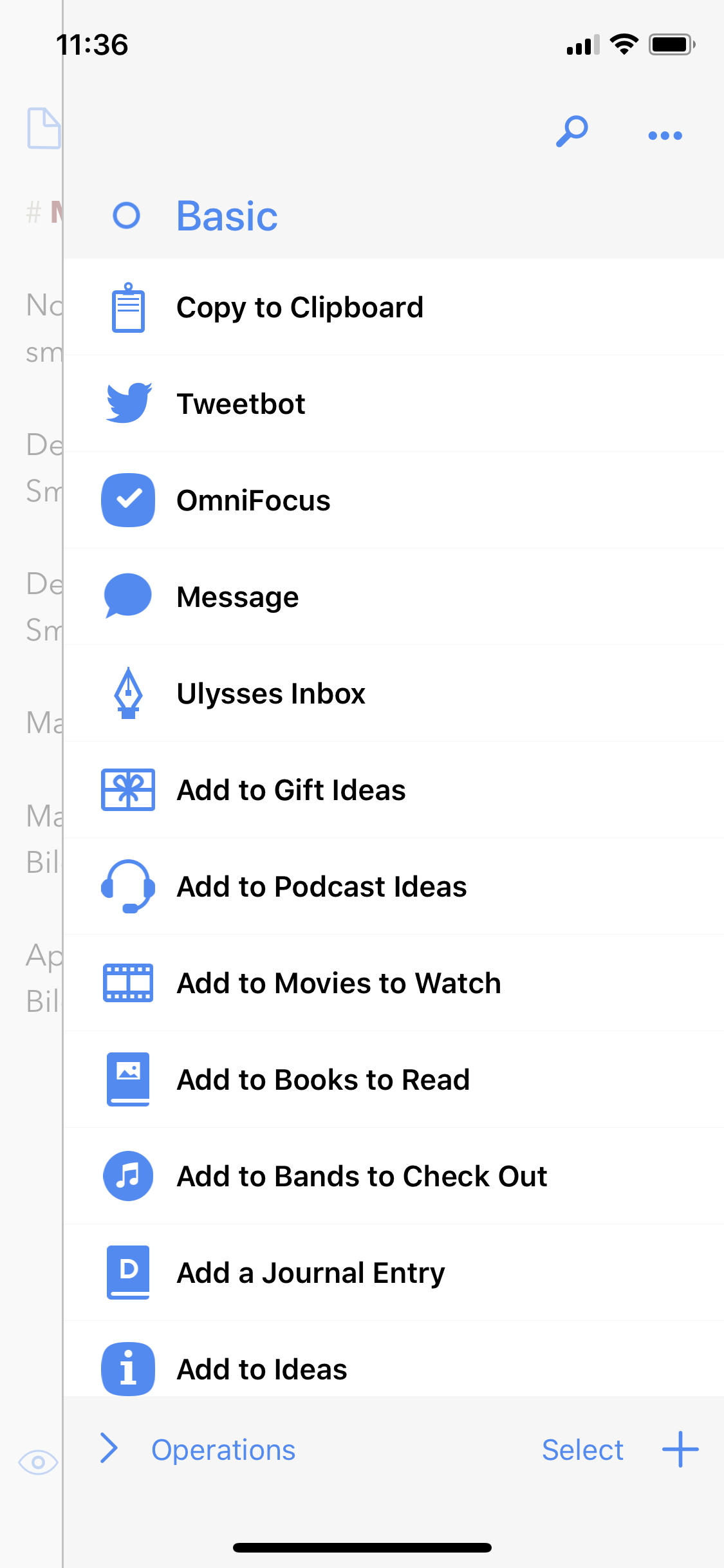
Drafts 5 Released

Apps

The new version of one of my favorite apps, Drafts, has been released:

Drafts is a launching-off point for text – use the actions to copy it, share it, or deep link into other apps and services. Compose a tweet or message, create a file in Dropbox, send a task off to Reminders – there are hooks into tons of your favorite apps.

If I need to make a note of anything, Drafts is where I start. Once I get the text out of my head and into the app, then I can decide where it needs to go (is it a tweet, task, reminder, note, etc.). It’s changed how I think about text and notes on my phone.

Apple Music Hits 40 Million Subscribers

Apple Music has hit 40 million subscribers:

The service still has a ways to go before it surpasses Spotify, which currently has 70 million paid Premium subscribers. A report in The Wall Street Journal earlier this year suggests that Apple Music’s quicker growth rate (five percent versus Spotify’s two percent growth) could mean it surpassing the Swedish streaming service as soon as this summer, however.

Spotify and Hulu Team Up for Joint $12.99 Plan

Janko Roettgers, writing for Variety:

Hulu and Spotify unveiled a new subscription bundle for avid streaming fans Wednesday: The plan, “Spotify Premium, now with Hulu,” combines a full Spotify a la carte subscription with Hulu’s entry-level on-demand service for $12.99 per month.

Bought individually, both plans would have a combined price tag of close to $18. The new bundle is initially available only to existing Spotify Premium subscribers in the U.S., who also get a chance to try out Hulu for three months for just 99 cents.

You can sign up here.

Blog: Watch MLB TV in Picture in Picture on a Mac

Six Colors:

It’s baseball season again, and there’s some good news for people who use MLB TV to watch out-of-market games on their Mac: This is the year that Major League Baseball has finally ditched Flash or Silverlight or whatever they were previously using for desktop streaming. This is nice, because it means I can use Safari (my preferred browser) rather than Chrome (which I keep around for sites that aren’t compatible with Safari or require Flash). But there’s a great side effect: It finally gives Macs the ability to do what iPads have been able to do for a couple of years, namely pop a baseball game into Picture in Picture mode, so it floats above other windows on your screen without any browser chrome getting in the way. […] Still, I was able to enable the Picture in Picture mode by using PiPifier, an app in the Mac App Store that adds a picture-in-picture button to the Safari toolbar.

You can grab the extension here. It works great.