
Review: Butch Walker – As…Glenn

A bar band balladeer playing songs in a smoky dive, hammering away at the piano and spilling his soul onto the keys as the hour gets progressively later and the inattentive crowd gets progressively more intoxicated. Or maybe there isn’t much of a “crowd” at all and he’s mostly playing for the bartender and a few drunk regulars. For so many musicians, these sentences describe a day-by-day and night-by-night reality. Getting gigs is easy; getting the audience to pay even an ounce of attention is hard. And yet, if you live that life, you still show up every night, seeking solace in the songs you’re playing and hoping that, one of these nights, even one other person will find meaning in them too.

We tend to think of careers in music as glamorous, but if you’ve actually tried your hand at one, you know the reality is something else entirely. It’s late nights and long tours and loneliness. It’s drunk people talking over your songs. It’s the sting of polite but passionless applause. It’s bar fights breaking up your set and derailing any momentum you felt you had going onstage. It’s the hope that maybe this song, maybe this show, maybe this night will be different; maybe this one will be the big break. And it’s the crushing disappointment of your reality consistently falling well short of your expectations.

On his 10th full-length album, Butch Walker turns all of this not-so-glamorous musical reality into fertile ground for the best music he’s made in years. The album in question, Butch Walker As…Glenn, is a not-quite-concept-album about a bar singer named Glenn (Butch’s middle name) and the songs he plays in his set on any given night, in any given pub, in any given town in America. Unlike Butch’s last album, 2020’s full-blown rock opera American Love Story, there isn’t really a firm narrative here. The concept is little more than a framing device, with the album starting on an introduction of the titular singer, ending with an encore, and featuring a skit about one of those aforementioned bar fights somewhere in the middle.

But listen to the songs themselves and you can hear how the spirit of the concept bled into Butch’s writing for this album. All the big-dream romanticism and all the weathered weariness of being a working-class career musician is there in the music, and the album knits those conflicting emotions and moods together into a surprisingly poignant treatise on resilience and the beauty of a no-frills, knockout song. Will Hoge once wrote: “Keep on dreaming if it breaks your heart.” Glenn is all about the musicians who keep dreaming that dream year after year, looking for moments of transcendence amidst colorful stage lights and bar floors sticky from decades worth of spilled beer. Some nights, you find that transcendence. Other nights, it might as well be a billion lightyears away.

Read More “Butch Walker – As…Glenn”
Review: Yellowcard – Southern Air

Yellowcard - Southern Air

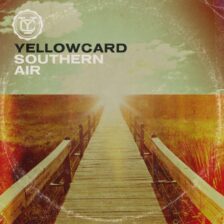
By default, the most important Yellowcard album is Ocean Avenue. It’s the one that made the band stars, the one that gave them a classic hit that still lingers in the cultural bloodstream, and the one that provided them with the platform to launch a long, rewarding career. But Southern Air, the band’s eighth studio album, is uniquely vital to the band’s story too, because without it, the Yellowcard arc would feel incomplete. It was the album that took everything they’d been building toward and everything they’d been promising as a band and captured it all perfectly in 10 songs and 40 minutes. It’s not the most famous Yellowcard album, and there are days when it’s not even my favorite, but it is the best single-album distillation of what this band was capable of when they were at their best. And somehow, it’s 10 years old this week.

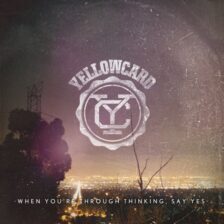
When Southern Air came out, it felt like Yellowcard had a lot of gas left in the tank. The band had just roared back to life the year before, with 2011’s When You’re Through Thinking, Say Yes, and Southern Air felt like the blockbuster sequel to that album. The two records share a lot, from their fleet 10-song tracklists to the faux vinyl wear rings that are drawn into the album art. Like two movies in a duology, they play beautifully as companion pieces – When You’re Through Thinking coming across as the origin story and Southern Air playing as the bigger, bolder, louder sequel that deepens the themes of its predecessor. In 2012, it felt like Yellowcard could keep making these types of albums forever, but looking back, Southern Air feels oddly like a swansong. The band would make another two LPs after this one, but this version of Yellowcard – this lineup, this sound, this aesthetic – would never exist again.

Read More “Yellowcard – Southern Air”

Review: The Gaslight Anthem – Handwritten

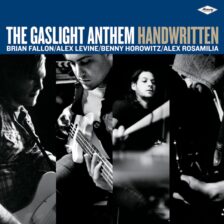
Northern Michigan tends to be famous for its brutal winters, but come around here in the summer and you might just see some shit. And by “some shit,” I mean blisteringly hot and oppressively humid days where there’s not a cloud in the sky to shield you from the unrelenting sun. Such were the conditions the first time I ever heard Handwritten.

The Gaslight Anthem’s fourth full-length album leaked to the internet on the hottest day of the hottest summer I can remember in my hometown. I recall that because my parents had no air conditioning when I was growing up, which meant their house could turn into a downright sweatbox on days like this one. My shitty 10-pound college laptop tended to overheat real fast on the hot days, which made it hard to do work, or download music, or talk about that music with your fellow fanatics on AbsolutePunk.net. So when Handwritten hit the web, I downloaded it quickly to my iPod and then just as quickly left the house for a beach three miles down the road.

My first listens of Handwritten were spent sitting at a picnic table less than 50 feet from Lake Michigan as evening settled in and a red-hot July sun sunk mercifully beyond the horizon. Every four or five songs I paused to plunge myself into the waves and cool myself off from the radiant heat that was still lingering thanks to sunbaked concrete and white-hot sand. By the time the album spun around to its last two tracks, a pair of glorious evening beauties called “Mae” and “National Anthem,” the temperature in the air was finally dissipating and a nighttime chill was creeping into the breeze. Somehow, a sweltering day had morphed into an unspeakably gorgeous summer night, and I got to experience it while watching the sunset over the water and waiting for kingdom come with the radio on.

I can’t recall many more idyllic first listens to an album than that one, and it’s still the first thing that pops into my mind whenever I hear Handwritten. “I’m in love with the way you’re in love with the night,” Brian Fallon sings on the title track. I always loved that line and how much it said without saying very much it all. It’s a lyric that conveys romance, and possibility, and youthful abandon, and all the magic a night can hold when you’re young and you’re up for anything. Hearing it for the first time on the cusp of a night just like the one described in the song, in the grips of full summer glory, was perfect. So was the album.

Read More “The Gaslight Anthem – Handwritten”

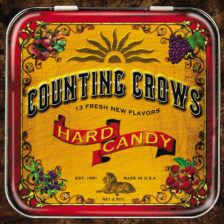
Review: Counting Crows – Hard Candy

Counting Crows will always be a band affiliated first and foremost with the 1990s. There are many good reasons for this fact, starting with the band’s 1993 debut album August & Everything After. A massive LP that spawned singles like “Mr. Jones” and “Round Here,” August remains the pinnacle of the band’s legacy. A few years back, when I saw the Crows live on a co-headlining tour with Matchbox Twenty, it was still the August songs that got the biggest response.

For me, though, I always affiliate Counting Crows instead with the mid-2000s. That’s not because I wasn’t aware enough to know about their music in the ‘90s. On the contrary, “Mr. Jones” is the first song I ever remember liking, and the band’s sound in general just makes me think of growing up. When I started really getting into music in 2003, I remember revisiting those first two Counting Crows albums—August and 1996’s Recovering the Satellites—and hearing so many songs that I recalled from my formative years. It felt like reconvening with old friends.

Read More “Counting Crows – Hard Candy”

Review: Japandroids – Celebration Rock

Fireworks, drums that sound like bomb blasts, lightning bolts of electric guitar, and a rhetorical question: “Long lit up tonight and still drinking/Don’t we have anything to live for?”

So begins one of the greatest rock records of the 21st century. It’s also one of the most aptly named. Celebration Rock. Rarely has an album title ever doubled so effectively as a perfect description of what’s inside. In 2012, with their second LP, Canadian rockers Japandroids served up music perfect for…well, for celebrating to.

What were we celebrating, you may ask? Frankly, if you had Celebration Rock blasting out of a stereo back in 2012, it didn’t matter what you were celebrating, or whether you were celebrating at all. The songs made it feel like a celebration. They made any moment feel like a goddamn, out-of-hand, my-car-is-in-the-swimming-pool rager.

I’ll forever be thankful that I was the age I was when Celebration Rock landed on May 29, 2012. As a recently-minted 21-year-old, I was old enough to get into bars and legally consume alcohol. But I was also still a college student, still sharing an apartment with my college buddies, and still another year or so shy of when real-life responsibility would start to set in. In other words, I was old enough to celebrate the way the characters in Celebration Rock celebrate, and young enough to do it with all the reckless abandon of youth. Even thinking about some of the shit I did while playing these songs very loud on my apartment stereo makes my head hurt with the ghosts of shitty mixed drinks and dreadful hangovers.

Read More “Japandroids – Celebration Rock”

Review: Something Corporate – Leaving Through The Window

“Write what you know.” That piece of advice has been given countless times to countless writers across countless different mediums, from books to films to TV shows. It’s not a bad tip, especially for greener storytellers, but it can also be limiting. In the world of songwriting, especially, one of the great joys is how a song can allow you to inhabit someone else’s life for a few minutes, or to experience a world other than your own. There’s something exhilarating about when a talented songwriter steps outside their own life to take a walk in someone else’s shoes, whether it’s Springsteen writing a bunch of songs about killers and criminals on Nebraska or Taylor Swift closing her own diary to explore character on folklore and evermore. Still, for some writers, the “Write what you know” mantra is the gateway to brilliance, and few young songwriters ever took it more seriously than Andrew McMahon did on Something Corporate’s 2002 major label debut, Leaving Through the Window.

McMahon turned 19 on September 3, 2001. A few months later, on the day after Christmas, he and his bandmates commenced recording for the album that would become their big breakthrough statement. By January, the album was done, and on May 7, 2002, it hit the streets. McMahon was still four months shy of his 20th birthday, and less than two years out of high school. Rather than try to write songs that hid his youth, McMahon embraced it. The result was one of the greatest and most authentic albums ever made about teen angst, growing up, and coming of age. Leaving Through the Window is now older than McMahon was when the record came out, but it remains gripping and beautiful due to how timeless the themes and stories proved to be.

Read More “Something Corporate – Leaving Through The Window”

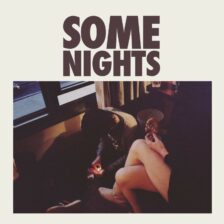
Review: fun. – Some Nights

fun. - Some Nights

I can still remember the moment when I realized that fun. were going to be ubiquitously, annoyingly, stratospherically huge. It was February 5, 2012 and I was sitting on a ratty faux-leather sofa in my college apartment, hanging out with my roommates and watching the Giants beat the Patriots in Super Bowl XLVI. During one of the commercial breaks, I heard an already familiar (to me) wall of synths and tinkling pianos, and a soon to be inescapable (to everyone) chorus hook that loudly declared: “Tonight/We are young/So let’s set the world on fire/We can burn brighter/Than the sun.”

That 60-second TV spot, an ad for the 2012 Chevy Sonic, effectively launched this trio of pop-rock polyglots into outer space. “We Are Young” already had a little bit of buzz building behind it at that point, having featured prominently in an episode of Glee that aired in December 2011. But it was the Super Bowl placement that, to quote the song, set the world on fire. A week later, “We Are Young” topped the Billboard Hot Digital Songs chart. 16 days after the Super Bowl, fun. released Some Nights, their sophomore album, which contained “We Are Young” in the track-three slot. The album sold 70,000 copies in the first week and debuted at No. 3 on the Billboard charts, despite generally mixed critical reviews. By March 17, “We Are Young” was the No. 1 song in the United States – a status it maintained for six weeks.

Read More “fun. – Some Nights”

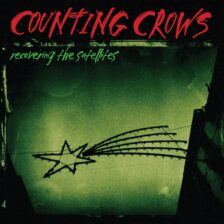
Review: Counting Crows – Recovering the Satellites

Few trends scream “nineties” more loudly than the “rebellion against fame” album. Nirvana made In Utero. Pearl Jam made Vitalogy. R.E.M. made Monster. Nowadays, it’s hard to imagine a rock band ever becoming famous enough in the mainstream to then justify the creation of a “rebellion against fame” album. For awhile there, though, making this type of album—usually a louder, more abrasive follow-up to a cleaner, more tasteful, massively successful predecessor—was a rock ‘n’ roll rite of passage. Few bands ever steered into the skid quite as much as Counting Crows did on Recovering the Satellites.

It’s difficult, from the vantage point of 2021’s pop music status quo, to describe how absolutely massive Counting Crows were in the mid-90s. The band’s debut, 1993’s August & Everything After, is certified seven-times platinum in the United States and has sold well north of 10 million copies worldwide. The flagship single, “Mr. Jones,” made it to number 2 on the Billboard Mainstream Top 40 chart. Ironically, “Mr. Jones” was a song about wanting to be famous; to be “big, big stars.” “When I look at the television I wanna see me/Staring right back at me,” frontman Adam Duritz sang in the song.

Be careful what you wish for, Adam.

Read More “Counting Crows – Recovering the Satellites”

Review: Noah Gundersen – A Pillar of Salt

Sometimes you can lose something that is still right there in front of you. A city you called home; a person who once felt as close to you as the wind on your face; a chapter of your life that still seems fresh in your memory, even if it’s long gone. These are the people and places and things that seem to form the beating heart of Noah Gundersen’s sublime fifth album, called A Pillar of Salt. It’s an album about bright little lost things; about flickers of memory so vivid that they seem like they’re happening now; of recollections or fragments of dreams that hurt like a dagger in your side because they remind you how much things have changed. Gundersen has always been good at conveying that type of loss: Of writing songs about lost loves that feel like cigarette smoke in your chest, or of capturing the very rhythm of autumn in his words and music. But it’s possible he’s never assembled a set of songs as stunningly beautiful and as disarmingly visceral as the 11 tracks that make up A Pillar of Salt. It’s an album that blindsides you, and that might just leave you gasping for air. I have not been able to go more than 24 hours without listening to it since I first heard it three weeks ago.

Read More “Noah Gundersen – A Pillar of Salt”

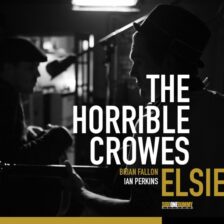
Review: The Horrible Crowes – Elsie

Brian Fallon didn’t NEED to make Elsie. By the time this album arrived – the one and only record Fallon made with the side project he dubbed The Horrible Crowes – Fallon was already well on his way to rock star status…or, at least, it seemed that way at the time. His full-time band, The Gaslight Anthem, had released three albums and an EP in the space of three years and about two weeks – a remarkable run that saw the band gaining ground with each release. By the time Elsie arrived in September 2011, there was already buzz brewing about Gaslight Anthem LP4, and about how that album had the potential to launch Fallon and company into a whole new stratosphere. Just about anyone else would have taken a well-deserved break. Based on the exhaustion that would eventually crash The Gaslight Anthem, maybe Fallon should have. Instead, he teamed up with his guitar tech, Ian Perkins, and made one of the great left-turn albums in 21st century rock ‘n’ roll. Some days, I think it might just be his masterpiece.

Read More “The Horrible Crowes – Elsie”

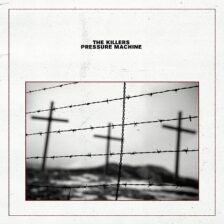
Review: The Killers – Pressure Machine

“I never really gave up on breaking out of this two-star town.”

When Brandon Flowers sang those words back in 2006, he completed a rock ‘n’ roll rite of passage: that of penning a great escapist anthem. The album he was working on at the time, the sophomore Killers LP Sam’s Town, was in part an homage to Bruce Springsteen, so it made sense for there to be a song like “Read My Mind” that channeled some of the pulling-out-of-here-to-win energy of Born to Run. When Flowers sang that song, you could hear in his voice the yearning to get out and find something better. You didn’t know where he was going, but you felt like he was probably never coming back.

Read More “The Killers – Pressure Machine”

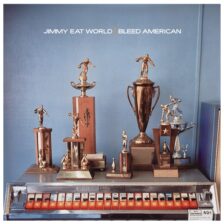
Review: Jimmy Eat World – Bleed American

Jimmy Eat World - Bleed American

Some songs just linger in the cultural bloodstream. It’s impossible to predict, in the moment, which songs those will be. Occasionally, it’s the big hits, but it’s also often those same world-conquering smashes that end up sounding the most dated in retrospect. Usually, you have to wait years or even decades to see which songs have truly become songbook classics, once all the context and narrative and hype and promotion has drifted into distant memory. You have to get to the point where all that remains is the song itself and the mysterious, beguiling hold it somehow continues to have over people.

There’s a spectacular cover band in my hometown that mostly plays songs from the classic rock era. It’s not hard to see why: Those songs have been proven staples for so long that building a setlist around them is just a smart business decision. You can’t miss with “Bohemian Rhapsody” or “Don’t Stop Believin’” or “American Girl.” You can’t miss with The Beatles or The Stones. There are precisely two post-2000 songs that I remember regularly hearing in the setlist from this particular cover band. The first one was “Mr. Brightside.”

The second was “The Middle.”

Read More “Jimmy Eat World – Bleed American”

Review: The Dangerous Summer – War Paint

The Dangerous Summer – War Paint

I’m not sure I have ever needed an album more than I needed War Paint.

Sometimes, as a music fan, you lean on the records you love to help get you through things: breakups; losing loved ones; navigating huge tectonic shifts in your life; global pandemics. As someone whose love for music springs from an extremely emotional place, I have leaned on a lot of different albums over the years, for a lot of different reasons.

But even in that context, War Paint, the sophomore LP from Baltimore-based rock band The Dangerous Summer, was an album I needed. I needed it so badly that I listened to it more times in July and August 2011 than I have ever listened to any other album in a two-month span. It was the rhythm of my days and nights; the heartbeat of my dreams; the soundtrack of my summer. To this day, I can’t think of a single thing that happened that season without also remembering the songs on War Paint. For me, that time in my life and this album will always be inextricably intertwined, as if they were hardwired together.

Read More “The Dangerous Summer – War Paint”

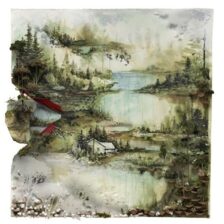
Review: Bon Iver – Bon Iver, Bon Iver

Bon Iver – Bon Iver, Bon Iver

Bon Iver, Bon Iver sounds like a summer storm. A muggy June evening; temperatures that hang suspended in the mid-70s, even after the sun goes down; heat lightning flashing on the horizon; and then, eventually, a torrential downpour, crashes of thunder, strikes of lightning too close for comfort.

Or maybe I just think this album sounds like all those things, because that happened to be the environment in which I first heard it. The night Bon Iver, Bon Iver leaked on the internet, weeks ahead of its June 21, 2011 release date, it was pouring in northern Michigan. When I first heard “Perth,” it felt like someone was taking the weather outside and translating it into music. The far-off guitar notes felt like the first flickers of lightning on the horizon. Vernon’s multi-tracked, harmony-backed voice, when it breaks through the waves about 45 seconds in, evoked the gentle drizzle of the storm’s start. And then, the crescendo: a martial drumbeat, a wash of horns, the guitar sparking louder and louder. The song builds until it sounds like a furious storm—the rain clattering against your windowpane, the thunder rattling the glasses in the cabinets, the lightning flashing so quickly that it seems to illuminate the entire outside world for minutes at a time. Soon, the song subsides, burns itself out. It fades to nothing as quickly as it exploded— just as a summer storm eventually crashes away.

Read More “Bon Iver – Bon Iver, Bon Iver”

Review: Yellowcard – When You’re Through Thinking, Say Yes

Yellowcard - When You're Through Thinking...

These days, bands don’t really break up: they go on hiatus. Occasionally, you’ll get a band separating more deliberately – doing or saying or writing something that makes it clear this break is meant to be permanent. More often, though, bands just stay dormant until they want to do it all over again – the recording sessions, and the press interviews, and the grueling tours – and then they reconvene. From Fall Out Boy to My Chemical Romance to Blink-182 and beyond, this narrative has played out repeatedly in our little music scene over the years. 10 years ago this week, it happened with Yellowcard.

Yellowcard are unique in that they’ve had both types of endings: the temporary one, with a hiatus designed as an indefinite time away from the music industry; and the permanent one, with a proper send-off album and farewell tour. When the band announced their hiatus in April of 2008, though, most fans probably would have bet on that being the period at the end of the sentence. “It doesn’t have anything to do with turmoil in the band,” frontman Ryan Key said at the time. “It’s more of a…[we’re] facing adulthood now, and we can’t stay in Neverland forever. I think we just need a break.” The Peter Pan reference? The suggestion that rock ‘n’ roll is a young man’s game? The exhaustion that seemed to permeate the last sentence? These ingredients did not bode well for the return of America’s favorite violin-toting pop-punk band.

Read More “Yellowcard – When You’re Through Thinking, Say Yes”