Following up Born To Run is something that seems like a monumental task, but given the pressure Bruce Springsteen experienced in earlier parts of his career, it probably didn’t seem like such a tall mountain to climb. When Springsteen released Born To Run, Columbia Records basically treated it as the 25-year-old’s last chance to write something that could make them some money. Luckily, Springsteen churned out one of the most fantastic records of all time, launching himself into stardom as a household name and a worldwide presence. Need further evidence as to his importance other than his extensive world touring after the record? On Oct. 27, 1975, both Time and Newsweek put Springsteen on their respective covers, with Time calling him “Rock’s New Sensation.”
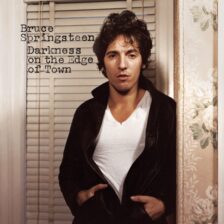
Read More “Bruce Springsteen – Darkness on the Edge of Town”Review: Bruce Springsteen – Nebraska
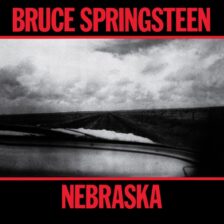
Bruce Springsteen’s 1982 release Nebraska is probably the release that Columbia Records was looking for when they signed a young and unproven Springsteen in the early 1970s. Although the record came about a decade later and it was Springsteen’s sixth studio album, Columbia probably isn’t too disappointed with how the whole Springsteen experiment played out.
The story behind Nebraska is not one that is known very well outside of the Springsteen faithful. Basically, The Boss recorded demos of an album that he meant to record with the E Street Band on a 4-track at home. When he went into the studio and the entire band recorded the album, Springsteen and his producers felt it didn’t translate right. The end result was the actual releasing of the demos, as recorded on a 4-track in Springsteen’s home. Let The Boss tell you about it himself.
I got a little Teac four-track cassette machine, and I said, I’m gonna record these songs, and if they sound good with just me doin’ ’em, then I’ll teach ’em to the band. I could sing and play the guitar, and then I had two tracks to do somethin’ else, like overdub a guitar or add a harmony. It was just gonna be a demo. Then I had a little Echoplex that I mixed through, and that was it. And that was the tape that became the record. It’s amazing that it got there, ’cause I was carryin’ that cassette around with me in my pocket without a case for a couple of week, just draggin’ it around. Finally, we realized, “Uh-oh, that’s the album.” Technically, it was difficult to get it on a disc. The stuff was recorded so strangely, the needle would read a lot of distortion and wouldn’t track in the wax. We almost had to release it as a cassette. [quote taken from a 1984 interview in Rolling Stone via the wonderful Wikipedia.]
I can’t even.
Read More “Bruce Springsteen – Nebraska”Review: Bruce Springsteen – The River

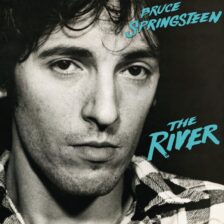
Unlike a couple of Bruce Springsteen’s previous records, The River can never be called a flawless effort. Arguments are made by some that Born To Run is a perfect work. With less fervor, people have called The Wild, The Innocent & The E Street Shuffle or Darkness On The Edge Of Town perfect. I’m not going to argue the degree of perfection found in any Springsteen album. But with The River, a 20-song, 83-minute behemoth of a double-disc record, there are certainly flaws. But with those flaws came yet another sign of Springsteen’s musical genius that was the most captivating part of rock and roll in the 1970s and 80s.
Springsteen originally recorded 10 songs for a record called The Ties That Bind, and that record was going to be released in late 1979. Instead of releasing that, Springsteen went back to the drawing board and wrote some darker material after penning a song called “The River.” The result was the double-disc that saw light of day in the fall of 1980. While the record didn’t have the compact and straightforward storytelling themes of Born To Runand Darkness, it does feature some of Springsteen’s most compelling songwriting.
Read More “Bruce Springsteen – The River”Review: Bruce Springsteen – Greetings From Asbury Park, N.J.
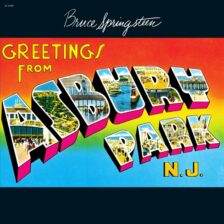
Greetings From Asbury Park, N.J. is one of the two records that Bruce Springsteen released before he was Bruce Springsteen. At this point in his career, a 23-year-old Springsteen was not yet The Boss, but a singer/songwriter who Columbia Records signed with the hope that he would blossom into the next Bob Dylan. To say the least, Columbia was not pleased with Springsteen’s January 1973 debut full-length, as Greetings had no huge singles and proved to be much more rock’n’roll than Columbia had bargained for.
The record was received well by critics at the time of release, but Springsteen didn’t become America’s favorite rock star right away. Columbia released “Blinded By the Light” and “Spirit In the Night” as singles, but neither had any impact whatsoever on any charts. Most people only know “Blinded By the Light” because of the remake by Manfred Mann’s Earth Band, and “Spirit By the Night” didn’t have the instant accessibility needed to become a regular number played on the radio. Considering the conditions under which the record was written, with Springsteen recording with producer/manager Mike Appel in one of the cheapest available studios in New York, it’s not much of a surprise that it only sold around 25,000 copies in its first year.
Read More “Bruce Springsteen – Greetings From Asbury Park, N.J.”Review: Bruce Springsteen – The Wild, The Innocent & The E Street Shuffle
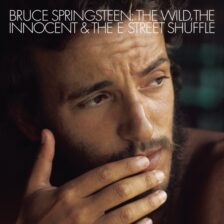
With Columbia Records disappointed at the result of Greetings From Asbury Park, N.J., there was only one thing for Bruce Springsteen to do – give it another chance. So what did he do? He wrote, recorded and released an entire record in less than a year. Even lessthan less than a year, if that makes sense. Greetings was released on Jan. 5, 1973. The Wild, The Innocent& The E Street Shuffle came out barely seven months later – on Sep. 11, 1973.
Perhaps more impressive than the short turnaround is the quantum leap between the two records. Shuffle is more rock’n’roll while at the same time being more funky, the lyricism is improved to an exponential power, and it is the recorded debut of Springsteen’s E Street Band. An interesting point is that when Springsteen started off, he signed a contract with Columbia Records for Bruce Springsteen – no E Street Band existed for quite a while. Even on Shuffle, only three members of the E Street Band would continue on to work with The Boss for his entire career.
Read More “Bruce Springsteen – The Wild, The Innocent & The E Street Shuffle”Review: Bruce Springsteen – Live At Hammersmith Odeon, 1975
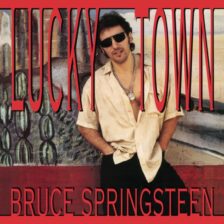
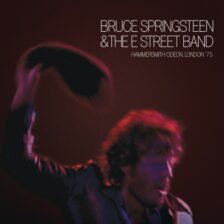
Next in the order of Bruce Springsteen’s studio records should be Darkness On The Edge Of Town. Rest assured, I’m not skipping Darkness, but I am skipping three other studio albums. Instead of doing reviews for The Ghost Of Tom Joad, Human Touch and Lucky Town, I am instead reviewing three live performances – Hammersmith Odeon, London ’75 (from the Born To Run 30th anniversary boxed set), Live In New York City ‘01 and London Calling. Since the Hammersmith Odeon concert happened in between Born to Run and Darkness, I’m just filing the review where it belongs in chronological order. The Darkness review will be up in next week’s batch.
If you read the last review in this series, about Born To Run, you probably noticed that I liked that record quite a bit. I wrote that I think it’s the best record of all time, so it should come as no surprise that I think Bruce Springsteen’s best touring days came after the release of that album. Many people subscribe to the opinion that Springsteen and The E Street Band were even more impressive after the release of Darkness On The Edge of Town, but I don’t think anything can compare to Springsteen’s performance at the Hammersmith Odeon in London in 1975.
Read More “Bruce Springsteen – Live At Hammersmith Odeon, 1975”Review: Balance and Composure – Separation
It’s May. A lot of reviewers write during this month about those summer albums that will define the next few months for America’s youth: the sky-high vocals and enormous hooks that will erupt from car stereo systems and overflow out open windows and into hot and humid summer air. Balance & Composure’s first full-length record, Separation, doesn’t have those airy, lightweight melodies that normally accompany beach trips or patriotic fireworks displays. It does, however, have one extremely important intrinsic quality to it – it’s probably the best record released in 2011 so far.
Read More “Balance and Composure – Separation”Review: Bruce Springsteen – Born To Run
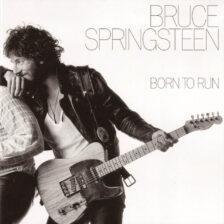
Born To Run is the best album ever written. It contains within its eight tracks the two best rock and roll songs ever written and three other songs that are damn close. The album cover is the best album art ever put on a record. This review does not reflect my bias of Bruce Springsteen and The E Street Band, but rather my honest opinion about what I (and many others) consider to be the record that saved rock and roll music.
When a 25-year-old Springsteen released Born To Run in 1975, he was almost ready to hang up his hat on music. Columbia Records did not approve of the cult following that Greetings From Asbury Park, N.J. and The Wild, The Innocent & The E Street Shufflecreated; they signed Springsteen with the very specific idea that he was going to sell as many records as Bob Dylan. They wanted his face on billboards on the highway, and they wanted his name on top of the Billboard singles charts every week. Springsteen has said that the only thing that made him write Born To Run was that he never wanted to have a 9-to-5 job in his life. In Dave Marsh’s biography of Springsteen, Marsh writes that Springsteen was finally going to call it quits if Born To Run didn’t succeed. Well, the record didn’t just succeed – it went down as one of the most important records ever released, and Springsteen filled an empty void as America’s beloved and adored rock and roll superstar.
Read More “Bruce Springsteen – Born To Run”Review: Manchester Orchestra – Simple Math
”I remember seeing the Blood Brothers play at the Masquerade and it scaring me to my core. I’d never heard of them. I just went with a friend, and then shortly after that I realized that I want that power. I wanted that power just to shock people with sound.” – Andy Hull
The first time I ever met Andy Hull, we connected a bit on a love for The Blood Brothers. Not a band you would expect the frontman and lyricist of Manchester Orchestra to have a heart for, but in reality, Hull has quite a musical archive of influence, even telling me how he likes turning fans onto new bands or ones they may never have heard of. Aside from his admiration as a music fan, the above pulled quote also speaks volumes in a quest to be not only challenged, but have the audacity to simply “put up or shut up.” With 2009’s Mean Everything to Nothing, the band saw a sophomore incline of sorts: two radio singles and a well-received album that personally landed in my lap at one of the biggest changes in my life thus far. On the most personal of levels, the band’s second release was the perfect soundtrack to leaving college and moving away as Deja Entendu was the score when entering it.
Read More “Manchester Orchestra – Simple Math”Review: Silverstein – Rescue
Music fans are usually faced with quite the dilemma when they are looking forward to a new record, especially if it’s coming from a band they’re particularly fond of. Do you want them to evolve – perhaps taking a leap to something you might not enjoy as much – or do you want them to stay…consistent? For the most part, the consensus seems to be that bands need to evolve to stay relevant. Grow with their audience, as some might say. Some bands do just fine by staying static, though. Look at New Found Glory: a consistent sound has lead them to become perhaps the greatest pop punk band ever. When they strayed a bit, on Coming Home, fans were generally displeased.
Silverstein is another band that has utilized a tried-and-true formula throughout its career, and Rescue, the band’s fifth studio album and debut for Hopeless Records, sees the Canadians doing more of the same. While the band won many over with its 2005 breakout, Discovering the Waterfront, fans of the band seemed to either grow more loyal or completely become disinterested when Arrivals and Departures and A Shipwreck In The Sand showcased similar sounds. The latter was Silverstein’s last record, a concept album which I considered to be fairly underrated.
Read More “Silverstein – Rescue”Review: Thursday – No Devolución
Honestly, we all should have seen this coming from Thursday. They’ve been dropping hints of a more atmospheric and textured sound in their records over the past five years (A City By The Light Divided, their split EP with Envy, and Common Existence). So anyone who is saying that their new album, No Devolución, is a new beginning or rebirth for the band just haven’t been paying attention. The common Thursday traits are still present: Geoff Rickly’s not-perfect-yet-so-perfect croon, distorted guitars, thick instrumentation, and, of course, Rickly’s realistic and cathartic lyrics. What’s different is that No Devolución isn’t as abrasive as Thursday albums past, rather it’s soaked in luscious, experimental tones and dark melodies.
Read More “Thursday – No Devolución”Review: Mansions – Dig Up The Dead
Ya know, Christopher Browder isn’t so different from you and me. Based on his previous work, I’d bet that we’ve felt the same as him at point or another in our lives, whether it be the same fears, thoughts, or aspirations. We’re all heavily flawed, and Browder isn’t afraid to share that. And that’s what makes Mansions’ second full length album, Dig Up The Dead, so instantly relatable. Throughout the ten tracks, Browder spins together intricate tales of loneliness, heartbreak, and doubt backed by layers of fuzzy, distorted guitars.
Read More “Mansions – Dig Up The Dead”Review: Panic! at the Disco – Vices & Virtues
This is what you wanted, right? A “return to form” – i.e. slick pop layered over synths, the occasional crunchy guitar and a weird fascination with Vaudeville (despite none of us knowing what that really means) – yep, this is you getting what you wanted. And although getting what we wanted can sometimes lead to felonies or regrettable Zune tattoos (R.I.P.), in this case what we wanted is what’s best for us and both remaining members of Panic!(!) At The Disco. With Vices & Virtues, Brendon Urie and Spencer Smith have created an album that isn’t mature, because what does that even mean, but an album that understands from its first note where it’s going and the best way to get there.
Read More “Panic! at the Disco – Vices & Virtues”Review: Yellowcard – When You’re Through Thinking, Say Yes
When Yellowcard announced its hiatus in 2008, the popular opinion was that the band was done for good. Listeners who felt as though they would never hear another record from the Jacksonville, Fla., five-piece pop-punk innovators were definitely not alone. While the band was only gone for just over two years ― not that long of a break in the grand scheme of things ― plenty of signs pointed to the conclusion that they were finished. Frontman Ryan Key started a new band called Big If, Longineu Parsons was drumming for other projects, and the other members of the group were strewn across the country each doing their own things. Capitol Records even came out with a weird four-track EP of previously released Yellowcard material entitled Deep Cuts.
Read More “Yellowcard – When You’re Through Thinking, Say Yes”Review: Bayside – Killing Time
There’s something that a lot of bands in today’s music scene don’t have. It’s a combination of things, really. It’s the consistency to be great, even good, over a considerable length of time, coupled with the guts and killer instinct to try out new things, to stretch boundaries and challenge themselves as musicians.
Bayside is a band that has that combination. With the release of its fifth studio full-length since 2004, Bayside has once again proven the notion that bands can keep the same sound they’ve had for years while still growing and putting out refreshingly worthwhile records. Killing Time takes the sound that the band focused on with 2008’s Shudder and mixes in glimpses of great Bayside records of years past. There are certain audible glimpses throughout the course of the 10-track record where fans familiar with Bayside’s earlier work will pick out parts where Bayside sounds like its old self, and parts where fans will notice that the band is trying something they’ve never done before.
Read More “Bayside – Killing Time”