Paramore have launched a new lineup of merchandise for kids.
Paramore Launches Kids Line


Paramore have launched a new lineup of merchandise for kids.

Less Than Jake have shared the new song “Anytime and Anywhere.”
Read More “Less Than Jake – “Anytime and Anywhere””
Gwen Stefani has released a video for “Here This Christmas.”
Read More “Gwen Stefani – “Here This Christmas” Video”
Ariana Grande has released a video for “34+35.”
Read More “Ariana Grande – “34+35” Video”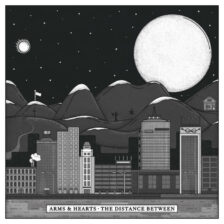
The Manchester melodic punk act formed by Steve Millar, better known as Arms & Hearts, makes a solid introduction to the folk-punk scene on The Distance Between. With a raspy voice that ranges from the howl of songwriting veterans such as Brian Fallon and Chuck Ragan, Millar makes a powerful opening statement on this collection of nine well-structured songs. The material teeters between sounding like a singer-songwriter at a dimly lit nightclub, to the full-bled passion of a punk band packed to capacity in a sweaty venue. What Millar does best is making his listeners hang on his every word as he sways from a soft croon to a blood-curdling scream.
Read More “Arms and Hearts – The Distance Between”
Cloud Nothings have shared the new song “The Spirt Of.”
Read More “Cloud Nothings – “The Spirt Of””
Music instrument retailer Guitar Center, which has been beset by mounting debt for years, says it expects to file for Chapter 11 bankruptcy protection after reaching a debt-reduction deal with its key stakeholders.

It is with no shock that I must report: Morrissey still sucks.
In his statement, Morrissey wrote: “BMG have appointed a new Executive who does not want another Morrissey album. Instead, the new BMG Executive has announced new plans for ‘diversity’ within BMG’s artist roster, and all projected BMG Morrissey releases/reissues have been scrapped. This news is perfectly in keeping with the relentless galvanic horror of 2020.”

Bandcamp have launched a new live streaming service:
Today we’re announcing Bandcamp Live, a new ticketed live streaming service that makes it easy for artists to perform for and connect with their fans, and for fans to directly support the artists they love.
Bandcamp Live is simple to set up, even if you’ve never streamed before, and is fully integrated with the rest of Bandcamp. This has several benefits: we automatically notify your fans when you announce a show, it’s easy to buy a ticket since so many people already have a Bandcamp account and saved credit card, and new buyers become your followers (and have the option to join your mailing list). You can also showcase your music and merchandise right alongside your stream in a virtual merch table.
This looks really well thought out and integrated into the platform.

Motion City Soundtrack talked with The Alternative about their hiatus and other topics:
“I’ve said this before; Josh and Matt and I, we’ve sent ideas back and forth intermittently since 2006,” Pierre says. “There is music to be made; I feel that. There are songs that I’m like, Fuck, this could be amazing, I’ve got this ditty that’s perfect. For me, I’ve found I’m much more concept-driven; I can’t write something unless I’ve got this big ridiculous plan. We do have a lot of songs and I think we could put this thing together if we could all get on the same page. But with the pandemic….”
Around the time My Dinosaur Life came out, the band members were writing parts on their own and sending them to each other, and they quickly came to realize how different that is from all being in the same room to hammer things out. It’s why they’re hesitant to try and make new music remotely during this continued lockdown period. “That emotion that happens in the room in those moments is what MCS is,” Cain says. “We could probably make something really cool as a mail-in record, but I worry about it having the substance we need to have.”

Hiding From Humans have released a video for “Whinge.”
Read More “Hiding From Humans – “Whinge” Video”
Radkey have shared a video for the new song “Seize.”
Read More “Radkey – “Seize” Video”
Nick Hexum of 311 is on the latest Going There with Dr. Mike podcast.

Refused have shared a video for “Malfire.”
Read More “Refused – “Malfire” Video”
Zeynep Tufekci, writing at The Atlantic, first with the good news:
The end may be near for the pestilence that has haunted the world this year. Good news is arriving on almost every front: treatments, vaccines, and our understanding of this coronavirus.
Pfizer and BioNTech have announced a stunning success rate in their early Phase 3 vaccine trials—if it holds up, it will be a game changer. Treatments have gotten better too. A monoclonal antibody drug—similar to what President Donald Trump and former Governor Chris Christie received—just earned emergency-use authorization from the FDA. Dexamethasone—a cheap, generic corticosteroid—cut the death rate by a third for severe COVID-19 cases in a clinical trial.
Doctors and nurses have much more expertise in managing cases, even in using nonmedical interventions like proning, which can improve patients’ breathing capacity simply by positioning them facedown. Health-care workers are also practicing fortified infection-control protocols, including universal masking in medical settings.
Our testing capacity has greatly expanded, and people are getting their results much more quickly. We may soon get cheaper, saliva-based rapid tests that people can administer on their own, itself a potential game changer.
And then with the kicker:
The best way to prepare would have been to enter this phase with as few cases as possible. In exponential processes like epidemics, the baseline matters a great deal. Once the numbers are this large, it’s very easy for them to get much larger, very quickly — and they will. When we start with half a million confirmed cases a week, as we had in mid-October, it’s like a runaway train. Only a few weeks later, we are already at about 1 million cases a week, with no sign of slowing down.
Americans are reporting higher numbers of contacts compared with the spring, probably because of quarantine fatigue and confusing guidance. It’s hard to keep up a restricted life. But what we’re facing now isn’t forever.
It’s time to buckle up and lock ourselves down again, and to do so with fresh vigilance. Remember: We are barely nine or 10 months into this pandemic, and we have not experienced a full-blown fall or winter season. Everything that we may have done somewhat cautiously — and gotten away with — in summer may carry a higher risk now, because the conditions are different and the case baseline is much higher.