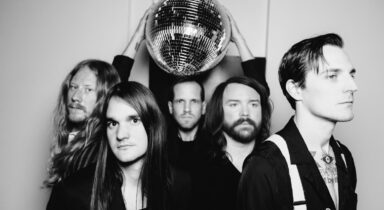
Frontman Keith Jeffery chats about aiming for a bigger sound on Atlas Genius’ sophomore effort Inanimate Objects, being overwhelmed by the whirlwind touring and success of the first album, and writing songs that always contain a glimmer of hope.
The Myth of Objectivity: Music Journalism in 2015
(ICYMI: This is a follow up to ‘Witch Hunts & Straw Men: Internet Discourse in 2015)
I want to start by saying that this is not about any particular incident, but instead is addressing a larger issue that is prevalent in our scene – misogyny and the underlying theme that overall treatment of women is a footnote of little to no consequence. We are starting to know who the culprits are, but each time there is an accusation, the same general outcry goes up regardless of evidence provided, or even our own common sense in regards to how society works. In reality, we all know bad behavior is treated as though it were acceptable from young men. We wouldn’t cling so tightly to the law to provide our moral compass if that wasn’t the case. The issue isn’t that we don’t think these dudes might be treating women badly. The issue is that we have decided, somewhere along the way, that unless their treatment of women is illegal, it isn’t an issue.
Read More “The Myth of Objectivity: Music Journalism in 2015”Interview: Chris Baio
Vampire Weekend bassist Chris Baio talks about his debut solo album The Names, life in London, the challenges of singing for the first time, and not getting bogged down in expectations.
Witch Hunts and Straw Men: Internet Discourse in 2015
Lately, there has been a lot of discourse on the Internet regarding how we talk about sexual abuse allegations. In those conversations, the real issue – which is the epidemic of abuse going on in our communities – often gets lost in the shuffle as skeptics and proponents of the status quo throw distraction after distraction into the ring.
Let me be clear: I am not talking about the rare occasion where an allegation is unfounded and/or proven to be merely attention seeking (which is reprehensible and inexcusable). I am talking about the vast majority of incidents where that is not the case – and I am also speaking on behalf of victims whose abuse is not acknowledged by the law at all (see: most psychological abuse or continual domestic mistreatment).
So without further ado – I’m going to address some of the more common responses to allegations and start to explore why they are a problem:
Read More “Witch Hunts and Straw Men: Internet Discourse in 2015”Interview: Paul Meany of Mutemath
Lead singer Paul Meany details the four-year process behind Mutemath’s upcoming fourth album Vitals, continually chasing the euphoric feeling of finishing a record, why the band has come full circle creatively after 10 years yet still pushes forward, and how writing songs that embody a spirit of life has helped him navigate as he’s grown older.
Interview: Robert DeLong
Robert DeLong chats about being more intentional on his second album In the Cards, approaching dance from an indie/singer-songwriter perspective, his unique musical background, and predicts the future of electronic music.
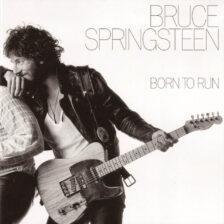
Review: Bruce Springsteen – Born to Run
Today (August 25th, 2015), Bruce Springsteen’s Born to Run has officially been around for 40 years. It’s only had a huge influence on my life, though, for about seven. For a considerable amount of my personal musical growth, I was aware of “the Boss” and his work, but it didn’t really resonate with me on a personal level. Born to Run, along with Born in the USA, Greetings from Asbury Park, and The Rising, were among the first albums I ever put on my first iPod back in 2004, as I looted my parents’ CD collection looking for more tunes to stock my brand new 20 gigabyte device. But while I loved hearing the title track pop up on shuffle during runs, and while later songs like “My City in Ruins” always struck a chord with me, it took another four years for Born to Run to really become that album in my life.
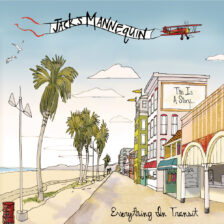
Review: Jack’s Mannequin – Everything in Transit
It’s late April 2010, but the weather is so glorious outside that it feels like it’s already June. Rain was threatening earlier, but now, the sun is beating down overhead as I pack the final items into my car for the three-hour journey home. I’ve just finished my freshman year of college and closed out a great semester, and my roommate and I are saying our goodbyes in the parking lot of our dormitory, after having handed over the keys to the room we’d shared since September. It’s a bittersweet moment, but I’m happy to be headed home to the resort town where I grew up for some much needed vacation. I climb into the front seat of my ’98 Honda Civic, plug my iPod into the FM transmitter, and briefly debate which album to choose. I smile as my thumb finds Jack’s Mannequinʼs Everything in Transit — one of my favorite albums of all time, and a record that has been my definitive “summer soundtrack” since I first discovered it four years earlier. I press play and the sounds of “Holiday from Real” come coursing through my speakers. “Fuck yeah, we can live like this,” Andrew McMahon sings. I put on my aviators, shift the car into first gear, and drive. This is going to be the perfect summer, I think to myself as I pull away from my first year of college. I can feel it.
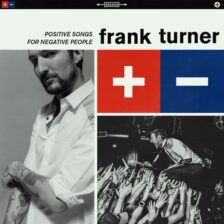
Review: Frank Turner – Positive Songs for Negative People
Album sequencing is a tricky thing. When it works, sequencing should feel so natural that it becomes impossible to imagine the album in question being presented in any other way. Perfect sequencing can bring the themes of an album into clear and pointed relief, and can hide the flaws of an album’s weak songs while using the best ones as big peaking payoffs. In a way, the art of sequencing is as important for an album—and as difficult to master—as the art of songwriting itself. When track order is bad, it can push you into viewing an album less as cohesive artistic statement, and more as a collection of tracks. But when clear painstaking attention has been paid to finding the perfect sequencing, it can legitimately make an album.
Read More “Frank Turner – Positive Songs for Negative People”Review: The Maine – American Candy
The year 2007 was a good time for fans of alternative pop music. That year was absolutely littered with bands who were writing catchy hooks left and right: Mayday Parade, Every Avenue, All Time Low, Forever the Sickest Kids, We The Kings, Farewell, The Cab… the list goes on and on. The problem however was that this resulted in a homogeneous sludge of power chords and breakup lyrics that made it impossible for anyone to stand out. Well, there was also a five piece band from Tempe called The Maine that began making waves with their EP The Way We Talk in ’07. Fast forward eight years and, unlike the majority of the bands above who have more or less disappeared completely, The Maine withstood the test of time, and with the same lineup to boot. They’ve grown and adapted their sound through the years and they’re still alive and well, this time producing one of their most well-rounded releases to date with American Candy.
Read More “The Maine – American Candy”Review: Knuckle Puck – Copacetic
Man, what a tall order it must be to create a pop-punk record in 2015. In a genre that went from maligned to mall playlist and back, it’s not surprising that bands are a little bit flummoxed as to what works and what should be left in a 9th grade trapper keeper. Knuckle Puck, perhaps more than any of their peers, toe this line delicately. While the music has grown up, offering instrumental denouements and actually interesting slow numbers, the lyrics are still firmly entrenched in the world of paralysis through heartbreak.
Read More “Knuckle Puck – Copacetic”Interview: Noah Gundersen
Last week, I got the chance to spend a half hour chatting with Seattle-based folk singer/songwriter, Noah Gundersen. Fresh off the release of his 2014 debut album, Ledges, and already gearing up for the release of the follow-up, Carry the Ghost, Gundersen spoke candidly about the collaborative nature of his new album, about keeping the intimacy of his earlier music alive whilst moving into full-band territory, about exploring difficult subjects like religion and existentialism in his lyrics, and about why we’ll probably be hearing yet another new album from him sooner rather than later.
Interview: Daniel Armbruster of Joywave
Lead singer Daniel Armbruster dives into the transformative experience of making Joywave’s debut album How Do You Feel Now?, going No. 1 with “Dangerous,” sampling Disney animated classics, growing up in Rochester, and dealing with the bumps in life.
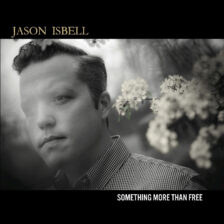
Review: Jason Isbell – Something More Than Free
Is Jason Isbell the best songwriter of his generation?
The former Drive-By Truckers member certainly made a case for the affirmative on Southeastern, his breakthrough solo LP from 2013. Southeastern was the kind of remarkable record that only grows in stature, importance, and personal impact over time. Written in the wake of Isbell getting sober and taking control of his life, Southeastern was at once both mournful and hopeful. Within those songs was a man with a suitcase full of doubts about himself, but also someone with the resilience to push forward and be better—at least with the helping hand of the person he loved most. “Home was a dream, one that I’d never seen, until you came along,” Isbell sang on “Cover Me Up,” Southeastern’s stirring mission statement, and the best song of the decade so far. He wrote it for Amanda Shires, the woman he married just months before Southeastern dropped, and the person he credits with saving him from the darkness.
Interview: Jim Adkins
Jim Adkins discusses taking a breather from Jimmy Eat World by going solo for the first time, exploring and reinterpreting ‘50s and ‘60s pop music, and why he’s releasing his songs individually instead of as an album.