Review: Green Day – Revolution Radio

Green Day - Revolution Radio

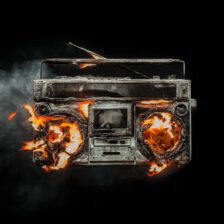
A lot of people probably thought Green Day were down for the count leading into 2004. They’d had a tumultuous decade of success in the 1990s, capturing the sound of a generation on Dookie and then writing the definitive graduation song with “Good Riddance (Time of Your Life).” Their catalog was stacked with hit singles and earworm hooks, but they’d ushered in the start of the new millennium with little fanfare. 2000’s Warning got decent reviews but changed their sound in ways fans probably weren’t expecting and weren’t terribly psyched about by being more folk-pop than pop-punk. That, combined with the lack of a world-conquering single and the fact that Napster was busy taking a hatchet to the record industry, meant that Warning only ever went gold. Not bad for your average band, but not so great for a group that had gone either multiplatinum or diamond on their three previous albums. Add the 2003 theft of the record that was supposed to the follow-up to Warning, and Green Day seemed washed up and left for dead.

Read More “Green Day – Revolution Radio”

Review: Ceres – Drag It Down on You

Ceres

Throughout most of the new Ceres album, Drag It Down on You, vocalist Tom Lanyon sounds pissed. Not pissed in the way that The Story So Far’s Parker Cannon sounds pissed, not the kind of pissed that makes you want to punch your bedroom wall, but the kind of pissed that makes you want to punch yourself. See, Lanyon and the rest of Ceres have done a lot of growing up since 2014’s remarkable debut, I Don’t Want to Be Anywhere But Here, and the result of that growth is the band’s sophomore album, which will go down as one of the best albums in an absolutely stacked year.

Read More “Ceres – Drag It Down on You”

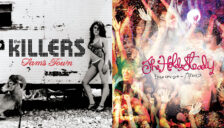
The Killers’ ‘Sam’s Town’ and The Hold Steady’s ‘Boys and Girls in America,’ 10 Years Later

Between 2002 and 2009, Bruce Springsteen released five studio albums. Rather remarkably, that statistic made the aughts Springsteen’s most prolific decade ever. The Boss fired off four straight classics in the 1970s (Greetings from Asbury Park, The Wild, The Innocent, The E Street Shuffle, Born to Run, and Darkness on the Edge of Town) and put out four more in the 1980s (The River, Nebraska, Born in the U.S.A. and Tunnel of Love) before faltering in both quality and output in the 1990s. (The last decade of the millennium only saw Human Touch, Lucky Town, and The Ghost of Tom Joad, all of which are among Springsteen’s weakest LPs.)

The 2000s, though, brought the man back to life. Suddenly, Springsteen albums (and good ones) were a regular occurrence again. During the seven years that elapsed between 2002 and 2009, we got three E Street Band records (The Rising, Magic, and Working on a Dream), one acoustic album (Devils & Dust), and one tribute record (The Seeger Sessions). Four of those five records are worthwhile (Working on a Dream is the dud), and two are genuine classics (The Rising and Magic both recapture the…well, “magic” of the E Street Band’s golden age). However, there’s still an argument to be made that the three best Springsteen albums of the 2000s weren’t even written by Bruce, but by guys named Brandon, Craig, and Brian.

Read More “The Killers’ ‘Sam’s Town’ and The Hold Steady’s ‘Boys and Girls in America,’ 10 Years Later”

Review: Microwave – Much Love

Microwave - Much Love

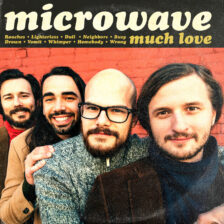
As I stare down my mid-twenties, I see the rest of my life hurtling toward me at full speed like a freight train with the brake lines cut. I feel my experience is nothing short of ubiquitous among those of my age group. Each of us may be staring down different issues: a full-time job that is perhaps not an actual career, mounting student loan debt, relationship troubles, and more. That uncertainty seems to linger there, just under the surface, at all hours of the day. These are the mounting insecurities and anxieties and, let’s face it, sometimes depression, that come with a perceived lack of direction in life.

We are all searching for someone who is trying to find that same meaning. It’s no surprise then, that the music we love often reflects back these same uncertainties, the same occasional short-lived self-loathing, and the probing existentialism of everyday life. And no record this year has struck that particular nerve for me in quite the way that Microwave’s Much Love has.

Read More “Microwave – Much Love”

Always Summer: A Farewell to Yellowcard

Yellowcard

The first time I heard Yellowcard was sometime in the summer of 2004. I think my sister and I were packing for our annual trip to visit my grandparents in New Hampshire and I had the radio on. (This event is notable because I can legitimately not remember the last time I had the radio on of my own accord.) I had my radio tuned to the local “modern rock” station, which played about 50% Staind and 50% everything else. They also had this feature called “the Buzzcut,” where they’d play an up-and-coming song from an up-and-coming band and ask listeners to call in with feedback. If listeners liked the song, it got added to the playlist. If they didn’t, it never got played again.

The Buzzcut song on this particular morning was “Ocean Avenue,” Yellowcard’s breakout hit single. At this point in time, the song was almost a year old, because it inexplicably wasn’t the lead single from the album of the same name. (More inexplicably, Capitol Records officially released “Ocean Avenue” as a single in February, the least appropriate month of entire year to be listening to “Ocean Avenue.”)

Read More “Always Summer: A Farewell to Yellowcard”

Review: Cymbals Eat Guitars – Pretty Years

Cymbals Eat Guitars - Pretty Years

Ah, The Weirdness.

Generally speaking, The Weirdness hits plenty of artists looking to follow-up their most critically acclaimed album. The timeline goes something like this: The Artist has likely released several albums to generally positive reviews. The Artist may have a modest-yet-loyal fanbase. Then, something happens to The Artist, causing them to reach within and write The Defining Statement. The Defining Statement is an album that makes critics take notice; The Defining Statement is a bridge between fans and critics. In fact, sometimes (but not always), The Artist goes on to resent or even loathe the success of The Defining Statement, and in an act of defiance, they give into The Weirdness.

The Weirdness is an album that turns heads. It is commonly experimental, a sonic left turn that pays more attention to The Artist’s tastes and less attention to what the fanbase may want. It can be an unfiltered and honest look into The Artist’s thoughts and influences. In short: The Weirdness can be awesome.

Read More “Cymbals Eat Guitars – Pretty Years”

Review: Touché Amoré – Stage Four

Touche Amore - Stage Four

In a year full of good music, it can be difficult to decide which records deserve your attention most. It seems as though every week has at least two releases worth dedicating precious listening time to. At that rate it can quickly become an overwhelming task to simply keep up. That’s why I find it necessary to tell you that if there is one must listen record this year: it’s the latest offering from Touché Amoré, titled Stage Four.

Read More “Touché Amoré – Stage Four”

Review: Dawes – We’re All Gonna Die

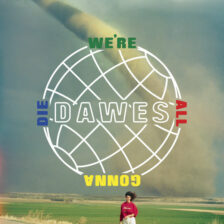
Dawes - We're All Gonna Die

I’m of the mind that no artist—band or solo—has had a more stellar run this decade than Dawes. After debuting in 2009 with the promising North Hills, the Los Angeles quartet fired off Nothing Is Wrong (2011), Stories Don’t End (2013), and All Your Favorite Bands (2015) in the space of just under four years. Not only are all of those records among the best of the decade so far, but they are also all markedly different from one another. Nothing Is Wrong is pitch-perfect Laurel Canyon folk rock, emulating Jackson Browne so successfully that Browne actually agreed to provide backing vocals on a track. Stories Don’t End took the band’s sound in a more modern, studio-driven pop direction, while last year’s All Your Favorite Bands was an Americana road trip of a record that returned the band to their live, improv-heavy roots. The latter features arguably the best playing of any rock album released since 2010.

Read More “Dawes – We’re All Gonna Die”

Review: John Mayer – Continuum

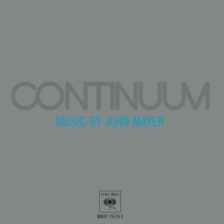
John Mayer Continuum

From the moment it was released, it seemed like John Mayer’s Continuum was poised to be a classic. That’s not because Mayer was particular respected at the time. Sure, Mayer hadn’t yet put his foot in his mouth by making stupid comments to interviewers. Still, though, the Berklee dropout turned pop sensation wasn’t exactly anyone’s first bet in the “guess who will have career longevity” game. It was obvious from early on that Mayer had chops, and equally obvious that he could write a damn sturdy pop song. (Listen to Room for Squares and tell me those tunes don’t still sound like hits.) But he was a teen pop icon first and foremost, and most of his songs seemed destined to become relics of early 2000s radio. You need only listen to “Your Body Is a Wonderland” once to realize how easily Mayer could have been a pop cultural punchline 10 years after the fact.

Read More “John Mayer – Continuum”