
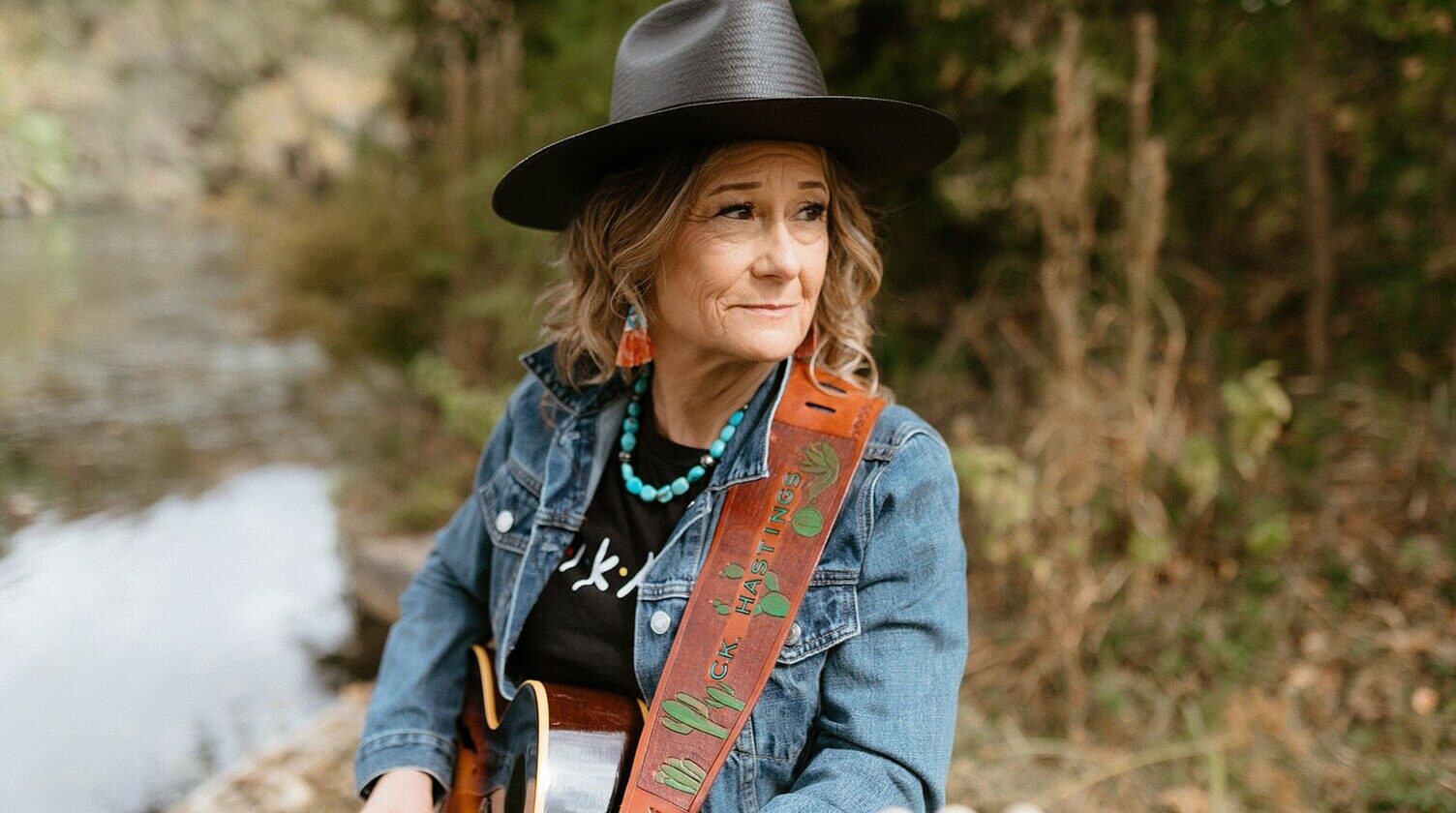
Today I’m so excited to bring everyone the latest single from songwriter Candace Hastings called “Call Your Mama.” The deeply personal song is sure to evoke some sort of emotions from anyone who takes the time to listen to it. When asked about the inspiration behind the new single, Candace Hastings shared:
This song was written by Mary Beth Schaefer, who is a talented songwriter and just happens to be my daughter. And the backstory behind the song is almost as good as the song. I can’t even remember why I had called my daughter, but she didn’t pick up and didn’t call me back for several days. At the time, I remember thinking, ‘I’m glad I wasn’t having a heart attack or anything,’ but honestly I know she’s busy and didn’t give it too much thought. She told me she had that reminder rolling around in her head—call your mom, call your mom—but when she sat down to write, it turned into something different. What she came up with was a song about those exes who like to circle back after everything is over—calling to check in, keep tabs, or ease their conscience, when really, they ought to call their mama instead. I released the song as a single because it’s an ex-song that has a take I’ve never heard before. There’s no revenge keying of the car, no yelling, just some good old-fashioned boundary setting by a strong woman who’s had enough.
If you’re enjoying this single, please consider pre-saving the track here.
What do you hope that listeners take away from hearing this song? What kind of feedback have you gotten from folks who have heard it? Have you ever played it live?
That emotional mix is part of what seems to connect with people. The song has humor and bite to it, but it also touches something deeper, and people respond to both sides of that. I’ve been playing “Call Your Mama” live for about two years now, and I’ve had people cry, but I’ve also had people chuckle. I’m not sure which end of the relationship those folks were in, but it always kind of makes me see the dark humor in the song. I asked my daughter what she hopes listeners take away from hearing this song, since she wrote it. She said she hopes that listeners can relate to it from one perspective or the other—either the person who’s telling or the person who needs to be told to call their mama. In her words, “We’ve probably all been both at some point. I have a friend who lost her mom in the past year or so, and she said she teared up when she heard the song. So I think folks might also respond to another aspect of it, which is the safety and security of a mother’s love. Even when other things in your life are broken, and even if you’ve been an asshole of a kid, she’ll be there, standing by, to help you pick up the pieces.”
What was it like recording a song that your daughter wrote?
I suppose I taught her to speak her mind, and I think all of us want our children to be stronger than we are. Every time I sing the song or listen to the recording, I think about her strength, but of course I also think about all her old boyfriends and wonder which ones she was thinking about when she wrote it. I haven’t asked whether it was this person or that person, and although I have a list of the usual suspects, I don’t really want to know. I have my own list of exes who should have called their mamas. It’s better if the ex remains an archetype. I asked my daughter what she thought about my recording the song, and she said she thought it was fitting, for obvious reasons. She also said she likes hearing other people play it so she can hear what they bring to it from their own experience. But she summed it up best by saying, “It’s fun that the whole thing is sort of meta; your mom playing a song you wrote about calling your mom.”
Do you have any particular memories about working on this song in the studio?
All the songs on this album, except this one, were produced by Pat Manske and Lloyd Maines, and they actually produced and played on this song the first time I recorded it. They asked how I envisioned the recording, and, at the time, I’d played it regularly live, but I felt that I was lacking a song with a little drive, so I asked Lloyd to put some red dirt in it. Pat and Lloyd were perfection. They did everything I asked them to do, but, when I heard the final mix, my gut told me that I was pushing the song in the wrong direction. I think remorse is the best way to describe my feelings. That, and embarrassment that I was working with the best in the business and had made a foolish mistake. The result was that I sat on the whole record for a year, fretting over that one song. One day last fall, I confessed my regret to my friend, Keith Davis, a great instrumentalist who cut his producer teeth at the same studio that Pat and Lloyd work out of. He generously offered to help me rearrange the song. We retooled it and recorded it at The Zone the next week. Later, when I told Pat about my embarrassment over making such a foolish mistake, he said, “You could have just told us you wanted to re-record the song.” I thought for sure they would think less of me, but that judgment was all in my head, not theirs.
What kind of a vibe were you going for with this song? Did it end up sounding like you thought it would before you went into the studio, or did it go in a different direction?
Even though I play a lot of cover songs, going into the studio with this song felt different. Mary Beth wrote it on the ukulele, so I tried the ukulele and the guitalele, and it just didn’t sound right. Her voice is so pure that at first I wasn’t sure I could do the song justice. I was almost afraid of it, afraid of disappointing her or misrepresenting what she created. What I was going for, more than anything, was a version that fit the song. But I think I had to stop being inside my head before I could get there. Once I worked on singing it as if it were mine, from my own experiences, it felt so comfortable, so easy to get inside of. In that sense, it did go in a different direction than I first expected. What I thought I needed at the beginning was not what the song needed in the end.
How does this song fit in or stand out among the others on the album?
I have a wide range of Americana musical styles and arrangements on the album, but “Call Your Mama” is probably the most Americana-centric song on it. The arrangement is unobtrusive, with acoustic guitar, bass, dobro, and percussion, and the dobro almost duets with the vocals. “Call Your Mama” and “Horses I Left Behind,” which is out now, are both minimalist songs. “Horses I Left Behind” only has acoustic guitar, vocals, and bass. Some of the other songs on the album are more “kitchen sink,” with lots of movement and intertwining fiddle, pedal steel, and piano. There’s even a swing song that has a 40-second fiddle solo. But this song rests in the vocals, so the arrangement puts the lyrics front and center. Lyrically, there’s a through-line on the album that focuses on loving and leaving, losing and finding. So even though I didn’t write the song, it belongs. I guess you could say it’s family.