













Review: Thrice – To Be Everywhere Is To Be Nowhere

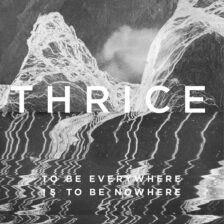
Thrice - To Be Everywhere

You have to pick one: an album you enjoy or an album that the artist is happy with.

I’m not here to say either answer is correct or to call those who don’t enjoy Thrice’s long-awaited comeback, and ninth studio album, To Be Everywhere Is To Be Nowhere, selfish or wrong. But let’s be honest and say that rarely does artistic growth and vision mesh completely with fan expectation. Essentially, I’m arguing that there are going to be some fans who are disappointed with Thrice’s new album. As unfortunate as that is, the band should take solace in knowing they’ve crafted their best work in years.


Read More “Thrice – To Be Everywhere Is To Be Nowhere”

Peter Thiel Backs Hulk Hogan’s Lawsuit Against Gawker

Daring Fireball

One of the more interesting stories in the journalism space over the past week has been the revelation that billionaire Peter Thiel has been secretly funding Hulk Hogan’s lawsuit against Gawker. I think, not surprisingly, I agree most with John Gruber’s take:

It’s free speech on both sides. Thiel was free to secretly back (and apparently strategically steer) Hogan’s case against Gawker. But Gawker founder Nick Denton was free to air his suspicion that Hogan had a billionaire Silicon Valley backer, and Forbes was free to out Thiel as said backer. And now commentators who are appalled are free to express their outrage at Thiel, perhaps embarrassing him and making it less likely that he or others of similar super-wealth will do this in the future.

You’re free to do stupid shit under the banner of free speech, and I’m free to say so.

Steal This Riff: How to Fix Copyright Law in Music

MTV

Miles Raymer, writing for MTV, looks at some ideas on fixing copyright law in how it relates to musicians and clearing samples:

Menell’s solution is to apply something called a compulsory license to sampling, remixing, and other derivative works. Compulsory licenses replace the process of gaining a copyright holder’s permission to make use of their original work with a flat royalty structure and a set of rules for how the work can be reinterpreted. We already have this kind of setup for cover songs: Under U.S. copyright law, anyone can perform and record any song that anyone else has written and recorded without getting their prior permission, as long as they pay a royalty to the copyright owner. This is why pop-punk bands can cover Top 40 songs, why iTunes is full of sound-alike cover versions of hit songs by artists it doesn’t have deals with, and why hip-hop producers often hire instrumentalists to play “interpolations” of musical passages they want to sample but can’t clear.

Twitter Remains Broken

Twitter

Aleen Mean, writing on her blog, on how in spite of the new features Twitter keeps rolling out, it remains broken in one glaring way: it’s too easy to abuse people on the service.

Time and time again, we’ve been told that the company is working on making things better for targets of harassment. What we see, however, are half-baked enhancements designed to make the service more appealing to advertisers and attempts at enticing new users. Many people have suggested changes they could implement to curb abuse. For example, Randi Lee Harper’s list of suggestions from earlier this year is still on-point.

Five Finger Death Punch Sign to Rise Records

Rise Records

Five Finger Death Punch has announced they’ve signed with Rise Records. They still owe their former label, Prospect Park, one more album (that the label is kinda saying sucks and are suing over). From the band’s announcement:

We have had great success with our current label, Prospect Park, and will continue to enjoy further success with our next and final album (subject to surmounting the label’s court action to prevent us from recording it), after which we will commence a new and exciting label partnership with the people at Rise and BMG.

I’m just surprised they didn’t find some way to throw in one more proclamation of the great success they were going to have with Rise and BMG.

Spotify’s Discovery Weekly Reaches 40 Million Users

Ben Popper, writing for The Verge, looks at just how big of a hit Spotify’s Discover Weekly playlist has been:

According to the stats Spotify released, more than half of Discover Weekly users listen to 10 tracks a week and save at least one of those songs to their favorites. The company is trying to highlight the boost in listening this feature has given to small- and medium-sized artists, and noted it will be sharing data from Discover Weekly with bands to try and help them connect with their newest fans.

20 Years Ago: Sublime Frontman Passes Away

Sublime

Brendan Manley, writing for Diffuser, remembers Bradley Nowell, the Sublime frontman, on the 20-year anniversary of his death:

After the album was released, it became a runaway success and spawned four hit singles (“What I Got,” “Santeria,” “Wrong Way” and “Doin’ Time”) on its way to multi-platinum status. It also helped define the ’90s third-wave ska scene (which also featured genre-bending bands like No Doubt and 311) and the album placed a global spotlight on Nowell’s evocative lyrical imagery and his unflinching portraits of the seedy side of SoCal.