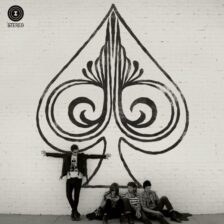
Review: Butch Walker – The Spade

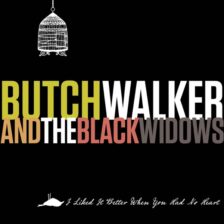
Following the album release and tour for 2010’s good-but-not-great I Liked It Better When You Had No Heart, Butch Walker’s first album with a new backing band called The Black Widows, a few things happened. First, Walker was signed to Dangerbird Records, which, after years of flitting between bona-fide major labels, indie imprints, and numerous independent start-up labels, finally seemed like the natural place for him. Second, the guys in The Black Widows were having so much fun touring with Butch (and writing songs together) that the majority of them decided to cut a new record. The resulting album, 2011’s The Spade, was the fastest turnaround between Butch Walker albums since the first two Marvelous 3 records. Walker, songwriting partner Michael Trent, bassist Jake Sinclair, and guitarists Fran Capitanelli and Chris Unck recorded The Spade in the space of a week in the early summer of 2011. Drummer Darren Dodd was gone, off to start a new band, and I never did hear what happened to keyboardist Wes Flowers. But the guys who stuck around were the key players anyway, and from the first time I streamed The Spade’s first single—a kinetic rush of a rock song called “Summer of ’89”—I knew that Butch was back on track.

Read More “Butch Walker – The Spade”

Review: Butch Walker – I Liked It Better When You Had No Heart

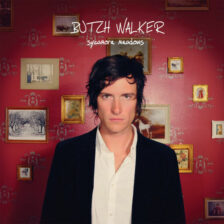
When Butch Walker released Sycamore Meadows in 2008, it felt like both a new beginning for him and the end of an era. Walker’s house had burned to the ground the year before, and he spent the songs on Sycamore reinventing his sound and injecting more layers of classic rock, folk Americana, and country twang into his writing than ever before. The result was arguably his best record, but for those who had followed Butch from the Marvelous 3 days, or jumped aboard with his early solo power pop albums, hearing him as he got older, wiser, and softer was somewhat of a bittersweet transformation. The shows on the Sycamore Meadows tour were still as rafter-raising and life-affirming as ever, but they couldn’t mask the feeling I had that Sycamore was the ending of the southern California trilogy that had kicked off with Letters and continued with The Rise and Fall. Where Letters was an album about falling in love and falling apart on the west coast, and where much of Rise was concerned with the cathartic and communal backdrop of the L.A. party scene, Sycamore left the ashes of Butch’s life in Malibu, on the street where he used to live, and no matter how good the music sounded, there was no denying that the man behind it had changed. He was looking for something new.

Read More “Butch Walker – I Liked It Better When You Had No Heart”

Review: Butch Walker – Sycamore Meadows

“I’m not happy with myself these days, I took the best parts of the script and I made them all cliche/And this red bandana’s surely gonna fade, even though it’s the only thing the fire didn’t take.”

Butch Walker sings those lines on “Going Back/Going Home,” one of the standout tracks from his fourth solo studio album, 2008’s Sycamore Meadows. That’s not a metaphorical fire, either. In November 2007, Walker lost his Malibu home, along with every guitar he’d ever owned and every master tape of every song he’d ever recorded, in a vicious assault of California wildfires. Pieces of recording equipment, cars, motorcycles, family heirlooms, photographs from happier times—they all turned to ashes on November 24 of that year. Luckily, Butch and his family were on tour in New York and no one was hurt, but the songwriter was suddenly cut adrift from all material possessions, forced to start over. The L.A. party of his previous record, 2006’s The Rise and Fall of Butch Walker and the Let’s-Go-Out-Tonites!, was more than over: it was a distant memory, a piece of another life. In his first public statement following the fire, Butch said “I feel like I finally know the difference between ‘going back’ and ‘going home.’” It wouldn’t be long before he would channel that sentiment into a song and album that were arguably career-defining moments for him.

Read More “Butch Walker – Sycamore Meadows”

Review: 1969 – Maya

2008 was the most prolific year of Butch Walker’s career, a remarkable feat considering what was going on in the singer/songwriter’s personal life at the time (more on that in today’s other review). February brought the release of a terrific live album called Leavin’ the Game on Luckie Street, which had been recorded at a marathon Atlanta show the previous year. It wouldn’t be until November that Butch’s next proper solo album would drop, but in the meantime, fans were treated to the first (and thus far, only) side project in his discography. The album in question, called Maya, was released under the moniker of 1969 (Walker’s birth year) and features Butch on vocals, Michael Guy Chislett on lead guitar, and Darren Dodd on drums. Both Dodd and Chislett had played on Butch’s previous solo record, 2006’s The Rise and Fall of Butch Walker and the Let’s-Go-Out-Tonites, and Dodd would remain a core member of Walker’s band until 2011. Chislett, meanwhile, ended up joining up with scene favorites The Academy Is… after The Rise and Fall, playing on two of the band’s albums (the Walker-produced Santi and the pop-heavy swansong, Fast Times at Barrington High) before they called it quits.

Read More “1969 – Maya”

Review: Butch Walker – The Rise and Fall of Butch Walker and the Let’s-Go-Out-Tonites!

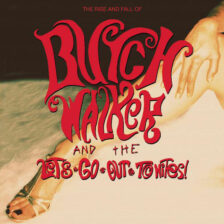
For a long time, I’ve thought that The Rise and Fall of Butch Walker and the Let’s-Go-Out-Tonites! was the most overlooked album in Butch Walker’s discography. Maybe that’s because it was the first Butch album that came out after I had become a die hard fan, and was, as such, probably the most I’ve ever anticipated an album. Or because Butch doing glam rock (and making incredibly obvious David Bowie references) produced the most exciting live set I think I’ve ever seen him play. Or maybe the underrated feel I get from this record is the result of the vast majority of these songs never showing up on “favorite” lists when I chat with other Butch fans. Whatever the reason, The Rise and Fall doesn’t get a lot of talk, and it never has. After this record started landing in fan mailboxes in early July 2006, many of the places that had reviewed Letters favorably stayed silent; one of my fellow bloggers, a guy who loves Butch every bit as much as I do, hardly mentioned the album at all until 2009, when it was one of the records Butch played in full during his winter “residency” concerts that year; and pretty much every Butch fan I’ve met on this very site will wax poetic on Letters or Sycamore Meadows, but will seemingly pretend that this album doesn’t exist.

Read More “Butch Walker – The Rise and Fall of Butch Walker and the Let’s-Go-Out-Tonites!”

Review: Butch Walker – Letters

Butch Walker - Letters

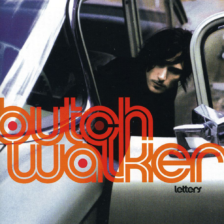
Letters is the best album of the past ten years, and the best album of the millennium thus far. How’s that for kicking off today’s installment of my “Butch Walker Week” coverage with a bit of hyperbolic praise? Except that I don’t think it’s a hyperbolic statement at all, nor do I think there is a record on the planet—with the possible exception of Born to Run—that has meant more to me in my life than this one. So far with Butch Walker Week, I’ve discussed four great records and dozens of terrific songs, music that I love and hold very near and dear to my heart. Letters blows all of that away in 14 songs and 50-some minutes of the most stunning and mature music that Walker has ever made. To date, Letters is the most cohesive record in the Butch Walker discography. It’s a stunningly gorgeous and sinfully catchy portrait of heartbreak and love on the west coast, sequenced perfectly to represent the ups and downs of a relationship. It’s lyrically brilliant and loaded with hooks, beautifully written and arranged to take advantage of fuller instrumental textures than ever before. The production is lush and enveloping, quite possibly my favorite example of studio work on any record that has ever graced my ears. And Butch’s flawless vocal performance towers above the whole thing, wrapping these songs in grand emotion, laugh-out-loud sarcasm, subtle sadness, and euphoric grandiosity; he has never sounded better.

Read More “Butch Walker – Letters”

Review: Butch Walker – Left of Self-Centered

“Just think, with Rock Vocal Power, you’ll never have to sound like this guy again!”

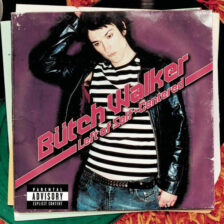
It’s hardly surprising that Butch Walker’s debut solo album—titled Left of Self-Centered and released by Arista Records in 2002—opens with a fair dose of sarcasm, cynicism, and self-deprecation. The above line comes from “Rock Vocal Power,” the introductory spoken-word track that kicks off the album. The song is satire, playing like a mock infomercial for an instructional audio series that can turn you into a famous rock singer for just six easy installments of $69.95(!) Butch makes fun of well-known and oft-imitated rock frontmen by offering to reveal their secrets (like Eddie Vedder’s “pickle-in-mouth technique,” or Kidd Rock’s “ever-popular hey-look-at-me-I-can’t-sing-so-run-me-through-the-computer” maneuver), and a fake Scott Stapp (the Creed guy) even provides a laugh-out-loud testimonial about going from a “bar singer playing Pearl Jam covers” to the frontman of his own original music band, all thanks to the series. The line quoted above is the final part of the comedy number, acting perfectly as a fade-in to the proper album opener (an energetic, sing-along rocker called “My Way”), and even years later, the bit is still pretty funny because its music-industry-oriented jokes have yet to go out of date. Unorthodox as it is in the opening slot, “Rock Vocal Power” is a patent Butch Walker number, a reminder of both how fickle the music industry is and of Butch’s refreshing decision as a performer to never take himself too seriously.

Read More “Butch Walker – Left of Self-Centered”

Review: Marvelous 3 – ReadySexGo

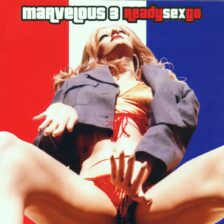
When Elektra Records picked up the Marvelous 3 and released Hey! Album as a major label debut in 1998, they thought they were signing a hit act. After all, the flagship single from that album, the mercilessly hooky “Freak of the Week,” had done quite well for itself as an independent release, notching near-ubiquitous airplay on the band’s local Atlanta radio stations and earning the Butch Walker-fronted power-pop-rock trio a passionate fanbase. But the wider mainstream audience wasn’t really ready for the catchy, idiosyncratic sound of Marvelous 3, which blended biting sarcasm, bitter lyrics about failed relationships, and easy-to-swallow melodies together into a unique concoction. Instead, the radio was turning toward boy bands and rap metal, and as “Freak of the Week” failed to score a high chart position, Elektra realized that they had signed anything but a hit pop act; they had signed a band that, in that age of pop music, wasn’t marketable to the average radio audience. At all.

Read More “Marvelous 3 – ReadySexGo”

Review: Marvelous 3 – Hey! Album

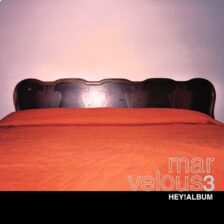
In the first installment of Butch Walker Week, I wrote that Math and Other Problems, the debut album from Walker’s 1990s power pop trio, the Marvelous 3, felt like a half-formed statement from a band that was still very indebted to their influences. On Hey! Album, the group’s sophomore-record-turned-major-label-debut, the leap forward is almost remarkable. Don’t get me wrong, Walker and company don’t try that many new things here: it’s still a slick, catchy album full of punchy power pop songs and with a foot planted firmly in 1980s alternative rock. But instead of spending the whole record imitating his influences, Walker establishes himself here as full-throated rock ‘n’ roll frontman, with the charisma, the passion, and the songwriting ability to go the whole nine yards. Naturally, his band follows suit.

Read More “Marvelous 3 – Hey! Album”

Review: Marvelous 3 – Math and Other Problems

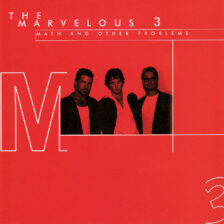
In the years that followed the dissolution of the Marvelous 3, a 1990s one-hit wonder power-pop trio fronted by Butch Walker, Butch would often remark that his band was “15 years too late and five years too early.” After all, Walker and his bandmates—bassist Jayce Fincher and a drummer who was only ever known as “Slug” in the album liner notes (his real name is Doug Mitchell)—didn’t really fit in with the broody nineties crowd. There’s not a single iota of grunge in any of the three records Walker and the rest of the Marvelous 3 ever produced, nor is there anything akin to the boy-band/pop-princess radio fodder that was poised to take over the world as the decade and the millennium ground to a close. Instead, the guys in the Marvelous 3 were disciples of eighties hair metal and trashy pop-rock songs, with a fair amount of classic glam and singer/songwriter mentality thrown in for good measure. Those influences probably meant the band was straight fucked from the moment they signed with Elektra Records, a label that became known for screwing over similarly-minded pop-rock acts (Third Eye Blind and Nada Surf, for example) before they ran out of money and went bust in the face of the Napster revolution. But for a few years at least, the Marvelous 3 got to act like rock stars, and in the process, they produced three of the finest power pop records of the past 20 years. 1997’s Math and Other Problems was the first.

Read More “Marvelous 3 – Math and Other Problems”

Review: Jimmy Eat World – Bleed American

Jimmy Eat World - Bleed American

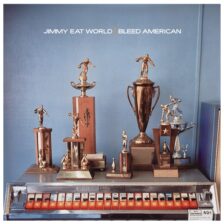
Only after several years can you begin to notice the influence a record has had. Some may say it takes foresight to know whether a record will become legendary, but there’s no way to really predict something like that. For this Retro Review project, we’re reviewing records that are a minimum of 10 years old – and with Jimmy Eat World’s Bleed American celebrating its 10th birthday on July 18, I can’t think of a better place to start.

The “Class of ’01,” not to infringe on AltPress’ phrase or anything, is very impressive. Bleed American, however, might be my favorite record from that entire year, and it would certainly be on a list of my all-time favorites from the genre. Jimmy Eat World does have a sense of early-decade pop-punk on the album, but it’s infused with their now-unmistakable brand of angst-ridden emo, making it a pop-punk sound no other bands have successfully duplicated. Bleed American was the launching point for Jimmy Eat World’s commercial success as well, spawning multiple hit singles.

Read More “Jimmy Eat World – Bleed American”

Review: Blink-182 – Take Off Your Pants and Jacket

Blink-182 - Take Off Your Pants and Jacket

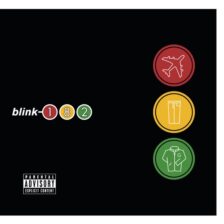
How does one begin to measure the influence of a band like Blink-182? You can’t count how many garage bands were spawned after Enema Of The State came out. You can’t put a price on taking a relatively new genre and thrusting it into the mainstream with full force. Without Blink 182 and their peers like Green Day and The Offspring, and a little while later, bands like New Found Glory, where would pop-punk be? It quite possibly would never have even gotten started.

Read More “Blink-182 – Take Off Your Pants and Jacket”

Review: Lifetime – Jersey’s Best Dancers

Lifetime - Jersey's Best Dancers

Once upon a time, somewhere in the swamps of Jersey, there existed a punk band that changed it all. I am speaking, of course, of Lifetime. Active first from 1990 to 1997, and then again beginning in 2005, Lifetime’s influence on what we call the “scene” today is impossible to understate. This album, as well as Hello Bastards, the one that preceded it, were influential to a variety of artists whose names you might recognize. Adam Lazzara of Taking Back Sunday has some of the band’s lyrics tattooed on his arm. Brand New lists Lifetime as “recommended listening” on their album Deja Entendu. The Gaslight Anthem references this album in their song “We Came to Dance.” Bands such as Rise Against, Silverstein and Fall Out Boy have recorded covers of their songs. The members of Thursday played some of their first shows with Lifetime, in Geoff Rickly’s basement. And then finally there is Saves the Day, whose debut album Can’t Slow Down comes as close as is humanly possible to imitating Lifetime’s sound without actual plagiarism. 

Read More “Lifetime – Jersey’s Best Dancers”

Review: Millencolin – Pennybridge Pioneers

Millencolin - Pennybridge Pioneers

Sometimes I wish I were like you, so why won’t you let me show who I am?

Eight years has passed since Sweden’s punk rock golden boys Millencolin have released their iconic full-length Pennybridge Pioneers, and looking back, we can see there is a certain tinge of irony lurking within Nikola Sarcevic’s self-deprecating lyrics (like the excerpt above from “Stop to Think”) that intersperse cold hard truths with dry, quirky humor.

Hailing from the Swedish town of Örebro (which translates quite literally to “pennybridge” in English), Millencolin rose to fame in the early 90’s as part of the skate punk revolution, quickly being snatched up and signed by Epitaph Records. With a new millennium came a new horizon for the band that had gained a fair amount of popularity and praise in Europe and Australia but had yet to capitalize on the success labelmates Rancid, NOFX, and The Offspring had found in America. Epitaph head (and Bad Religion guitarist/co-songwriter) Brett Gurewitz took the band under his wing and produced Pennybridge Pioneers, their highest selling album to date, taking them from outside their comfort zone in the rolling hills of Sweden to record in the rolling hills of Hollywood.

Read More “Millencolin – Pennybridge Pioneers”

Review: Park – It Won’t Snow Where You’re Going

Park - It Won't Snow Where You're Going

When a band includes a disclaimer in their lyrics booklet explaining that musical themes of suicide should not be acted upon by the listener, they must really mean business. I hear the phrase “summer album” thrown around often in connection to upbeat and poppy albums. In contrast, Park’s It Won’t Snow Where You’re Going is the kind of album needed for warmth through the coldest of winters. Though there is little to nothing that can be described as cheerful in vocalist/guitarist Ladd Mitchell’s lyrics, there’s something encouraging in screaming ‘Let’s give up / Let’s give in’ during times of personal strife.

Though his lyrics are one of the main draws to Park, Mitchell’s vocals are nothing extraordinary. There’s something humbling about this, though. It makes him an everyman, someone whose troubles are easy to relate to. With that being said, at certain moments on the album his voice does shine brighter than usual. There’s an unmistakable build up on the track “Pomona for Empusa,” and for a few moments before the chorus Mitchell conveys his current frustration excellently with the single lyric, ‘Jesus Christ, what was I thinking?’ This short pause is made even better with limited accompaniment by guitarist Justin Valenti, who dwindles towards lower notes on the fretboard as a representation of Mitchell’s sinking state.

Read More “Park – It Won’t Snow Where You’re Going”