Review: Head Automatica – Popaganda

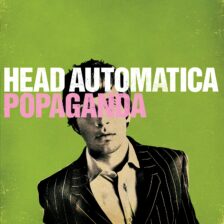
Head Automatica - Popaganda

While most fans of Daryl Palumbo’s power pop project, Head Automatica, point to the band’s debut of Decadence as their best work, I am firmly in the camp that Popaganda is the better album. Heavily inspired by the infectious melodies of The Beatles and the upbeat nature of Elvis Costello, Popaganda came storming out of the gate with the bulletproof single of “Graduation Day” that ignited the limitless possibilities of the band. The record was produced by veteran hit-maker Howard Benson (My Chemical Romance, Saosin), and it has an undeniable sheen to its vibrant sound. The promotional cycle of the record got a bit derailed due to Palumbo’s struggles with Crohn’s disease and the inability to stay on the road as much as he and his bandmates may have wanted. However, giving a fresh listen to this record today is a warm and inviting experience that brought back a flood of positive memories for me during the summer of 2006. It was a CD that spent more time in my car’s player than it did on the shelf, and it stills sounds as urgent and refreshing to this day.

Read More “Head Automatica – Popaganda”

Review: Angels & Airwaves – We Don’t Need To Whisper

The build-up to Angels & Airwaves debut LP, We Don’t Need To Whisper, was a contentious combination of hurt feelings (due to the sudden break up of Blink-182), excessive hype (mostly from Tom DeLonge about this new band he was starting), and mystery. The record was produced by Tom DeLonge in his home studio in San Diego, California, and the hype train surrounding the spacey rock found on We Don’t Need To Whisper made almost everyone curious about this new band. The band was rounded out by Box Car Racer guitarist David Kennedy, drummer Atom Willard, and bassist Ryan Sinn. I can vividly remember my anticipation of wanting to wrap my ears around this LP for the first time at midnight of May 23rd, 2006, and be transported into a world that DeLonge was describing as “life-changing.” With the lights out in my room, I started the process of listening to this album from front to back, the way it was intended, but I couldn’t help but think that as good as the album was, my expectations of hearing something life-altering were way overblown. We Don’t Need To Whisper still holds up to this day as a solid album, it features some truly incredible songs, and yet I can also see why most critics didn’t quite “get” what DeLonge was going for here.

Read More “Angels & Airwaves – We Don’t Need To Whisper”

Review: Sum 41 – All Killer, No Filler

Sum 41 - All Killer, No Filler

The debut album from Sum 41 is 25 years old today. Let that sink in for a bit. All Killer, No Filler was a bold introductory statement for a young band to make given how many other albums released during the early 00’s were bloated with extra songs that you’d wonder how they ever made the final sequencing of the record. Yet, Sum 41 pulled off this claim of having 13 solid songs from front to back that, with the exception of maybe the bookends of the intro and “joke” song of an Iron Maiden-esque “Pain For Pleasure” as the closer, to launch their careers. “Fat Lip”, the lead single from the set, appeared to be on MTV more often than not when you turned to that channel, and was an immediate success right out of the gate for Sum 41. It made a household name out of Deryck Whibley, the charismatic frontman and primary songwriter for the band, and the rest of Sum 41 would ride this early success over an eight-album career that recently came to an end. All Killer, No Filler was a product of its own success, with the pop-punk genre being at the height of its popularity at this period of time, and it found an audience almost immediately with Sum 41’s slick brand of speedy, skater pop-punk.

Read More “Sum 41 – All Killer, No Filler”

Review: Alien Ant Farm – ANThology

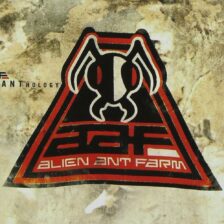
The tale of Alien Ant Farm oddly doesn’t begin with ANThology. The band formed in 1996 and would release two EPs leading up to their first full-length record in 1999 that they anointed Greatest Hits. After forming a friendship with Papa Roach due to playing similar music circuits in Los Angeles, California, Alien Ant Farm would eventually sign a Dreamworks Records imprint known as New Noize to begin re-tooling their major label debut of ANThology with the Infest producer, Jay Baumgardner. The set was introduced by the lead single of “Movies” that came out January 2001, but the record wouldn’t fully take off until the Michael Jackson cover of “Smooth Criminal” dominated the rock airwaves that Summer. The rest of the tunes that make up ANThology are really strong for a debut LP, and highlighted the quirky magic of Alien Ant Farm and their captivating front-man, Dryden Mitchell. While the band may be best known for their breakthrough cover of a Michael Jackson song, ANThology deserves another look on its 25th anniversary.

Read More “Alien Ant Farm – ANThology”

Review: Hawthorne Heights – If Only You Were Lonely

Hawthorne Heights - If Only You Were Lonely

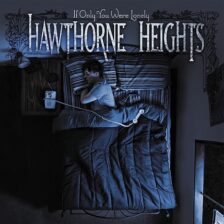
The critical reception to the sophomore album by Hawthorne Heights was anything but kind. But did this band that stormed onto the scene with The Silence in Black and White, and the emo classic of “Ohio Is For Lovers”, really deserve the hate that came from the release of If Only You Were Lonely? In my opinion, not by a long shot. While I can see why some writers took it upon themselves to write scathing reviews based on the album’s song titles like “Where Can I Stab Myself In The Ears” and “We Are So Last Year”, I feel there is still a charm and magic to If Only You Were Lonely. The set was released on Victory Records 20 years ago, and the promotion of the record was preceded by two singles in “This Is Who We Are” and the massively popular “Saying Sorry” that would lead to Hawthorne Heights’ highest charting album to date (#3 on the Billboard 200). The album would be the band’s final one with rhythm guitarist/backing vocalist Casey Calvert, who tragically passed away in November of 2007. The critics who panned If Only You Were Lonely were largely tuned out by Hawthorne Heights’ fans, and the LP was certified Gold by the RIAA by March of 2016. While Hawthorne Heights seemed to be an easy target for criticism of the emo genre, it’s hard to not admit that If Only You Were Lonely was an important record in the development of the band.

Read More “Hawthorne Heights – If Only You Were Lonely”

Review: Goldfinger – Goldfinger

Goldfinger - Goldfinger

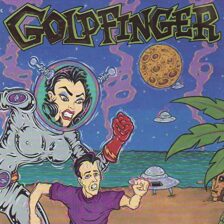
The debut studio album by ska punk legends Goldfinger is turning 30 years old tomorrow, and it still has a bit of a unique charm to it. It’s the only Goldfinger record to not be produced in any capacity by lead singer/band leader John Feldmann, and it was all recorded directly to analog tape under the direction of Mojo Records founder Jay Rifkin. Goldfinger also spawned the band’s highest charting single to date in “Here In Your Bedroom” that was a Top 5 rock hit in the states. The sound feels like a mix between Dookie-era Green Day, paired with the ska horns of Reel Big Fish, and with an experimental vocal approach from Feldmann that channeled The Clash’s Joe Strummer. Goldfinger were just beginning to figure out their sound on this album, and it’s still a bit of a mixed bag in the overall listening experience. Songs like “King For A Day” and “Mable” are a ton of fun, and Goldfinger is worth another look.

Read More “Goldfinger – Goldfinger”

Review: American Hi-Fi – American Hi-Fi

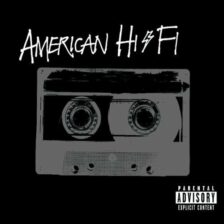
Over the course of my lifetime there have been a handful of records that grabbed me from the first spin, stayed with me during various phases of my life, and continued to make a meaningful impact every time I revisited them. This is one of those albums. American Hi-Fi charmed their way onto the alternative rock scene in 2001 with their breakthrough debut single, “Flavor of the Weak”, that featured big-sounding guitars, paired with a pop sheen to it to ensure it would make an impact on radio. American Hi-Fi was produced by veteran producer, Bob Rock (Aerosmith, Bon Jovi), whom the band credits as making their debut “huge-sounding.” This wasn’t just your run of the mill debut rock record that had one or two good songs on it, and was bloated with filler around it. Quite the opposite. American Hi-Fi made a household name out of songwriter/vocalist Stacy Jones and would begin the astonishing rise of one of the more interesting power pop bands to come out of the early 00’s.

Read More “American Hi-Fi – American Hi-Fi”

Review: Matchbook Romance – Voices

Matchbook Romance - Voices

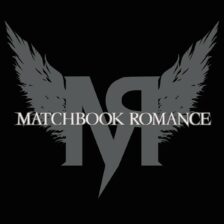
After touring for nearly a year and a half on their debut LP, Stories and Alibis, Matchbook Romance buckled down in Long View Farm studios in Massachusetts to write the follow-up to their breakthrough onto the emo scene. Voices features a departure from the sound of their debut, and charted at #43 on the Billboard 200 upon its release on Valentine’s Day in 2006. Based on the strength of the lead single, “Monsters,” Matchbook Romance proved that they were capable of being much more than just your “stereotypical emo band.” Instead, Voices led the band down a darker path and expanded their audience along the way. The set was produced by John Goodmanson (Sleater-Kinney, Death Cab For Cutie) and the artwork was designed by Shawn Harris of The Matches. Voices is a record that I found immediately gripping and urgent, and I’m so glad that Matchbook Romance took this big risk on their sophomore effort.

Read More “Matchbook Romance – Voices”

Review: Yellowcard – Lights and Sounds

Yellowcard - Lights and Sounds

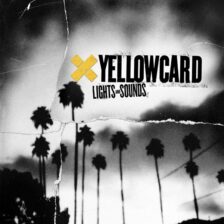
On the surface, Lights and Sounds had all the makings of a big rock record. Yellowcard paired up with a trusted producer in Neal Avron, who also worked with the band on their breakthrough, Ocean Avenue. The album had an incredible lead single out of the gate with the aggressive title track, and was mixed by veteran Tom Lord-Alge. What left fans most perplexed by what their heard from Yellowcard was the near abandonment of the sound that made the band a household name with Ocean Avenue. Instead, Yellowcard leaned into a darker-tinged alternative rock approach to their music that led to a bit of confusion and lukewarm critical reviews of the material. Lights and Sounds would debut at number five on the Billboard 200 charts, and would eventually achieve Gold certification from the RIAA in March of 2006. My memories surrounding this particular album were the polarizing affect it had on Yellowcard’s trajectory as an artist, how it would lead to confusion in the band’s fanbase, and then the biggest of swings back in the right direction with the 2007 successor of Paper Walls. At the end of the recording process, lead guitarist Ben Harper would leave the band and would be replaced with the now-permanent member of Yellowcard, Ryan Mendez. This rollercoaster of emotions surrounding Lights and Sounds would’ve been enough to break the spirit and desire of most bands, but luckily for us, Yellowcard would take this detour in stride and rise once again.

Read More “Yellowcard – Lights and Sounds”

Review: Panic! At The Disco – Death of a Bachelor

Panic! At The Disco - Death of a Bachelor

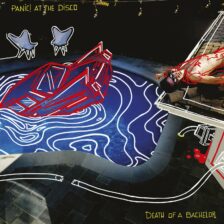
During an interview in mid-2015, Panic! At The Disco leader, Brendon Urie, was asked what his next record sounded like. Urie replied, “It’s going to be a little bit different, it’s this mix between Sinatra and Queen, if that makes any sense…Every time we do a new album, for me, it’s always evolving and changing—in the best way.” Death of a Bachelor does have a little bit of everything going for it, including four solid singles that preceded the album release in January of 2016, and the summary of Frank Sinatra meets Queen does sound about right looking back on the record’s 10th anniversary. Urie was already breaking out in a big way as a solo star as more and more band members took steps away from the spotlight, but Death of a Bachelor was technically the first album completely written, recorded, and performed by Urie. Armed with a trio of producers in Jake Sinclair, J.R. Rotem, and Imad Royal, Urie leaned heavily upon his vocal prowess to make for another standout moment in his trajectory as an artist. Brendon Urie’s solo star burns brightest on Death of a Bachelor, and it remains one of the clearest realizations of his vision for Panic! At The Disco’s music.

Read More “Panic! At The Disco – Death of a Bachelor”

Review: Green Day – Warning

Green Day - Warning

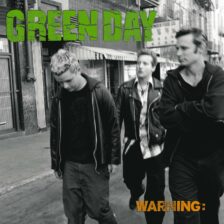
The sixth studio album from Green Day, Warning, tends to get forgotten way too often, and yet it has all the makings of a killer record from the punk band. The LP finds Green Day at arguably their most melodic, and there’s no denying the catchiness of these songs that were self-produced by the band. Coming off of another breakthrough success in 1997’s Nimrod that spawned the smash single of “Good Riddance (Time of Your Life)” that was literally everywhere when it was released, Green Day could’ve gone in a multitude of directions on this follow-up. There’s something really endearing about a band willing to take some creative freedom by self-producing their music at this stage of their career when their songwriting was truly blossoming at the right time. The set has now gone on to sell over 1 million units in the States, while selling over 3 million copies worldwide. Any other band would give their left arm for those numbers, but Green Day would brush off any talks of Warning being a commercial disappointment by going even bigger and bolder on their punk rock opera known as American Idiot in 2004. Warning deserves another look on its 25th anniversary, and it’s one of my favorite pop-punk records of all time.

Read More “Green Day – Warning”

Review: The Fray – How To Save A Life

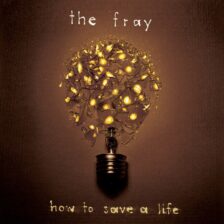
The Fray - How To Save A Life

We all know the song by heart by now. “Step one, you say we need to talk / He walks, you say, ‘Sit down, it’s just a talk’ / He smiles politely back at you / You stare politely right on through,” are the lyrics fully ingrained in my head from the debut studio album from The Fray and their break-though single of the same name. How To Save A Life got a bit of an unfair shakedown from critics upon its release nearly 20 years ago today. Some critics went as far as saying the band “lacked originality”, but you have to remember what was going on in the Alt Rock scene at that time. Coldplay had already solidified themselves as major players with their first two records, Radiohead were releasing game-changing records left and right, and The Fray were coming onto the “soft rock” scene budding with promise and starry-eyed vision for their piano-laced music. How To Save A Life has since been certified double platinum by the RIAA, and it also became one of the all-time best-selling digital albums of that decade.

Read More “The Fray – How To Save A Life”

Review: Filter – Short Bus

Filter - Short Bus

The story of Filter began when lead singer/band founder, Richard Patrick, mentioned in past interviews that when he was chatting with his touring bandmate of NIN singer (Trent Reznor), he suggested that Patrick make his own record while Nine Inch Nails went off to record their now-classic of The Downward Spiral. The tunes that Richard Patrick crafted on Short Bus were heavily influenced by his time in touring with NIN, yet they feature a lot more guitar parts in them to set Filter on a different artistic course than the aforementioned other touring project. Short Bus was released on April 25th, 1995, and has sold over a million copies in the U.S., spearheaded by the breakthrough success of Filter’s debut single of “Hey Man Nice Shot.” The set was co-produced by Richard Patrick and his musician friend, Brian Liesegang, who conceived the idea of Filter in the early 90’s. During the recording sessions, Patrick acted as the primary songwriter/bassist/vocalist, while Liesegang primarily handled production duties and programming the drum machine they used on Short Bus, and the duo split the guitar duties. While the band’s sophomore record, Title of Record, would blast Filter into the Alt Rock mainstream with the soft rock hit of “Take A Picture,” Short Bus is ultimately the album that longtime Filter fans point to as the key moment in time when Richard Patrick and Brian Liesegang were at their creative peak.

Read More “Filter – Short Bus”

Review: Blindside – The Great Depression

Blindside - The Great Depression

The twentieth anniversary of the fifth studio album by Blindside is coming up this weekend, so it’s time to revisit The Great Depression. The album was largely influenced by a trip to Africa that their lead singer, Christian Lindskog, which left the singer “unsettled” by his experience and the things he saw vastly influenced the direction of the record. The LP also found Blindside going with an independent label, after the moderate commercial success of Silence and About a Burning Fire, and deciding to work with a different producer as well in Lasse Mårtén. While I felt the pairing of the previous two records with veteran producer, Howard Benson, was a match made in music heaven for Blindside, The Great Depression is truly an “artist’s record” in that the band was beginning to see the world through a much different lens. The set would spawn two singles in “Fell In Love With The Game” and the reflective “When I Remember,” but had trouble gaining traction commercially. The album is still adored by many Blindside fans to this day, and it’s easy to see why after a fresh listen. The Great Depression marked a significant shift in Blindside’s artistic direction, and left hints as to where they would take their sound on subsequent releases.

Read More “Blindside – The Great Depression”

Review: The All-American Rejects – Move Along

All American Rejects - Move Along

”When all you got to keep is strong / Move along, move along like I know ya do / And even when your hope is gone / Move along, move along just to make it through.” Simple lyrics, but immediately impactful from The All-American Rejects on their sophomore smash of a record called Move Along. The band found an immediate spark in their songwriting under the careful tutelage of veteran producer Howard Benson, recorded by Mike Plotnikoff, and mixed by a “living legend” in Chris Lord-Alge, AAR struck gold…rather platinum (x3). This was the first album to feature guitarist Mike Kennerty and drummer Chris Gaylor, while the band’s self-titled debut was a two-piece effort between Tyson Ritter (vocals/bass) and Nick Wheeler (guitars/keyboards/programming). Looking back today on the record that changed The All-American Rejects commercial prospects for the foreseeable future is a fun task. The album spawned three singles in the infectious guitar pop of “Dirty Little Secret”, the timeless title track, and the piano-laced ballad of “It Ends Tonight.” The band has found an entirely new shelf life to Move Along, and their entire discography, by self-promoting impromptu house parties to begin the next phase of the band.

Read More “The All-American Rejects – Move Along”