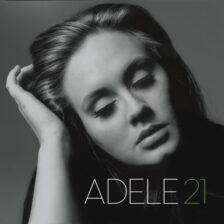
Review: Adele – 21

Has any artist ever thrown down the gauntlet at the beginning of a year quite like Adele did with 21? Arriving on January 24, 2011 (in the United Kingdom, that is; it hit shelves in the States a month later), 21 quickly became not just the defining musical blockbuster of that year, but also of the still-young decade. No album since has had the same impact on the music world, or the world as a whole. 21 briefly made it feel like no one had ever heard another breakup album before. The mythology around the album (“Who broke Adele’s heart?” was a common question), along with the strength of the songs, made for a moment in music history that was genuinely monocultural. These days, it seems like there’s nothing everyone can share as common ground – period, let alone musically. 21 was different: a true four-quadrant classic that had something for everyone. From the pop music stans to the music critics to the songwriting classicists, Adele checked every box. Looking back, it feels like the last album that everyone could agree on. In terms of cultural significance, chart dominance, Grammy chances, and a million other metrics, every other artist who released something in 2011 was competing for second place.

While 21 dropped in January. I have never thought of it as a “winter” album. One of the (many) disadvantages to being a broke college student living in an outdated dorm in the winter of 2011 was that you had no good method to hear the latest music as it was breaking. Spotify hadn’t launched in the U.S. yet, paying for downloads via iTunes (or driving somewhere to buy a CD) wasn’t in the budget, and pirating music over the ethernet-only internet connection was both slow as hell and risky. That’s why I often went months without hearing the music that everyone else was talking about, 21 included. In this particular case, though, the delay proved to be serendipitous.

Read More “Adele – 21”

Review: Taylor Swift – Evermore

Taylor Swift - evermore

I don’t think it’s an exaggeration to say that Taylor Swift’s folklore was one of 2020’s few saving graces. For myself and many other Taylor fans, the songs on that album were a salve to sooth some of the heartbreak and disappointment of this year. Even the discourse around the songs was a welcome distraction from all the bad things happening around us. That the album would never have come to exist, likely in any form, without the pandemic is one of the only positives in this remarkably net-negative hellscape we’ve been living in since March. So when Taylor announced that she’d be dropping a sequel album called evermore last Thursday, it felt a bit like lightning striking twice. The first album was a sepia-toned autumnal beauty shot through with the wistful strains of a dying summer—in 2020’s case, a lost summer. Released two weeks out from what could be the loneliest Christmas many people ever experience, evermore promised to be folklore’s wintry twin: a cold-weather soundtrack full of snow-strewn backdrops, frosty windows, and solitary reflections. Taylor positioned the album as her gift to everyone else for her 31st birthday, but it’s more like alternative Christmas music in a year when playing the usual celebratory Christmas tunes seems bizarre or even profane. Tis the damn season, folks, and Taylor Swift is here to get you through it.

Read More “Taylor Swift – Evermore”

Review: Chris Stapleton – Starting Over

Chris Stapleton - Starting Over

Chris Stapleton, it seems, has little interest in being famous. Five years on from the CMA Awards team-up with Justin Timberlake that made Stapleton a superstar, he’s yet to cash in on his A-list status in any of the significant way, barring perhaps playing concerts in bigger rooms. His follow-up to 2015’s Traveller could have been gargantuan. He easily could have called in another favor from Timberlake for a guest feature, and you have to assume that other famous pop stars, country stars, songwriters, and producers were lining up to work with him. Yet, rather than deliver a bid for crossover success, Stapleton dropped a pair of albums that were, essentially, b-side collections. From A Room: Vol. 1 and From A Room: Vol. 2, released roughly six months apart in 2017, were made up of covers and songs that Stapleton had written during his long career as a writer for a Nashville publishing agency. The songs didn’t grapple with Stapleton’s newfound fame, nor did they really push any boundaries in terms of sonics or structure. Instead, both records played like low-stakes almost-demo collections, with spartan production, no notable features, and no-frills production from Dave Cobb, the same guy who’d sat behind the boards for Traveller.

Read More “Chris Stapleton – Starting Over”

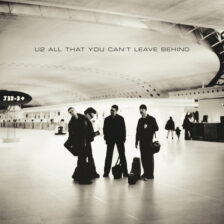
Review: U2 – All That You Can’t Leave Behind

U2 - All That You Can't Leave Behind

All That You Can’t Leave Behind is not the best U2 album. The Joshua Tree is greater and grander. Achtung Baby is more innovative and more daring. War has more to say. I can see reasonable arguments for preferring most of the U2 catalog over this record—and frankly, many U2 fans do. Even the band’s non-Achtung ‘90s albums—the experimental, occasionally brilliant, occasionally baffling pair of Zooropa and Pop—tend to garner more praise from the average U2 fan than their 2000 comeback. And yet, despite all the criticisms thrown at All That You Can’t Leave Behind—that it’s too safe; that it effectively ends U2’s legacy as a chance-taking band; that it’s as top-heavy as any 2000s record give or take a Hot Fuss—it’s also, by far, the U2 album I reach for most. The Joshua Tree is my go-to favorite, and Achtung is the one I love thinking about most, but All That You Can’t Leave Behind has an advantage over both: something about it just feels like home.

Read More “U2 – All That You Can’t Leave Behind”

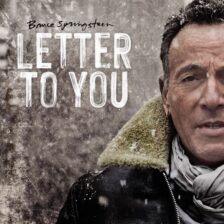
Review: Bruce Springsteen – Letter to You

Bruce Springsteen - Letter to You

At this point, you don’t get a Bruce Springsteen and the E Street Band project without questions about it being the last one. That’s actually been the case for years: when Springsteen and company closed out their 1999-2000 reunion tour at Madison Square Garden with a special extended version of “Blood Brothers,” it felt remarkably final. Nine years later, when The Boss concluded the Working on a Dream tour with a full-circle performance of his debut album, 1973’s Greetings from Asbury Park, NJ, a common topic of conversation in the Springsteen fan community was about whether we’d ever get another E Street tour. The band came back in 2012—sans late sideman Clarence Clemons—for a tour supporting Springsteen’s then-new LP Wrecking Ball, and came back again in 2016 to play 1980’s double-LP masterpiece The River in full night after night. At the end of each tour, the question resurfaced: was this the last dance? The ensuing years only gave credence to the idea that it might be, as Springsteen penned his memoir, spent more than year on Broadway, and circled back to old songs for last year’s solo Western Stars. Each of these projects was wrought with ruminations about fading youth, aging, and mortality. Bruce wrote and spoke extensively about Clemons, whose death in 2011 clearly shook him to the core. On Stars, he closed the album with “Moonlight Motel,” his most aching look back at the past, and at the little glories of youthful freedom and young love that can’t quite ever be replicated or recaptured.

Read More “Bruce Springsteen – Letter to You”

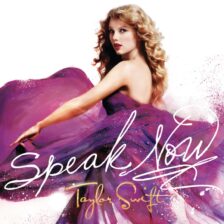
Review: Taylor Swift – Speak Now

Taylor Swift - Speak Now

Speak Now is the most pivotal album in the Taylor Swift discography. It’s not the one that started the story (2006’s self-titled debut) or the one that made her a global superstar (2008’s Fearless), nor is it her biggest album (2014’s 1989) or her straight-up best (2012’s Red). But it was on Speak Now where Swift took full control of her creative enterprise, came into her own as a songwriter, and established many of the key elements that would ground her career for the next decade. It also might be the album that, more than any other, sets the table for the next 10 years of country music, from the pop influences to the confessional style of songwriting. It is, in a word, a landmark.

Swift, unlike many mainstream country stars, was always a songwriter first and foremost. Her debut self-titled record dropped when she was just 16 years old, but she still had writing credits on all 11 songs (and wrote three of them solo, including the number-one country smash “Our Song”). On Fearless, she more than doubled that number, taking solo writing credits on seven of the 13 songs (including “Love Story,” which briefly became the best-selling country single of all time). Still, Swift racked up a lot of co-writes on those first two albums, particularly with veteran Nashville songwriter Liz Rose, who has 12 writing credits across Taylor Swift and Fearless. On Speak Now, the big selling point isn’t that it’s a concept album about wild romance and dramatic heartbreak (Red), or a leap into pop (1989), or a rejoinder to her haters (Reputation), or her “indie” record (folklore). No, the big selling point here is the simple fact that Swift wrote all 14 tracks by herself.

Read More “Taylor Swift – Speak Now”

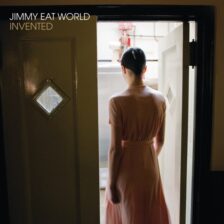
Review: Jimmy Eat World – Invented

Jimmy Eat World - Invented

I have fallen in love with a disproportionately large number of my favorite albums in cars. Riding in cars, sleeping in cars, driving in cars, singing in cars. 15-minute drives to school in cars and cross-country road trips in cars. Nighttime drives with no other cars on the road and gridlocked rush hour drives with hundreds of other cars on the road. Hot-as-hell summer drives in cars and cold-as-ice winter drives in cars that were slipping and sliding down snow-covered roads. Celebratory “turn the music up” moments in cars with friends, and long, lonely, sad solo drives in cars with nothing but the music and my own thoughts to keep me company. There is something about being in transit in an automobile that makes music sound better, and it’s something that can’t be replicated on a boat, or a plane, or a train, or a subway, or a city bus. It’s the combination of the small space and the big sound, of the endless scenery flying by outside the window and the tiny self-contained environment of the vehicle. The right car ride can make a good album sound great and a great album sound immaculate. I don’t think it’s any coincidence that my fondest years of musical discovery align directly with the years where I spent the most time in cars.

Read More “Jimmy Eat World – Invented”

Review: Ruston Kelly – Shape & Destroy

On his debut album, 2018’s sublime Dying Star, Ruston Kelly grappled with addiction and found his way to sobriety. It was a raw, revealing, heart-wrenching record, wrought with struggle and pain and rendered incredibly moving by what looked, at the time, like a hard-won happy ending. Kelly wrote the album after getting sober, falling in love, and getting married, to country star Kacey Musgraves. “I’m a dying star, front seat of your car/Where you brave the cold and come find me falling apart/Brought me out of the dark/I went way too far this time.” So Kelly sang on Dying Star’s eponymous song and penultimate track. In the album’s liner notes, he explained the lyrics and the idea of the song, which were inspired directly by the support Musgraves lent to him when he needed a little help pulling himself out of the darkness:

Stars are born and will die to be born as new stars again. A supernova brings life anew to the universe. A galactic baptism of sorts.

This song is an ode to the love between Kacey and I. There were many nights during the making of this record where I broke down in her car from the weight of who I had been. And how deep below I felt under it. And she every time, with patience and that special redemptive power only great women possess, reminded me I’m not that man anymore. No matter who or where you are, you have your thorn. It is my belief that’s why we are alive on this earth. To see the glow in the cracks. Light in the tunnel. Suffering is a prerequisite to joy in my opinion. But it’s also the human element that connects us all.

Read More “Ruston Kelly – Shape & Destroy”

Review: The Killers – Imploding the Mirage

The Killers - Imploding the Mirage

Did The Killers just make their best record?

Conventional wisdom about The Killers—at least in the critical community—is that they peaked on their first record, delivered a few iconic hits and a bunch of filler, and then went off on an ill-advised journey to become this generation’s U2 (if this generation’s U2 were fronted by Bruce Springsteen, that is). People adored the glitzy, hedonistic pop tunes on 2004’s Hot Fuss because they were undeniable. They still are: there’s a reason “Mr. Brightside” kills at every wedding you’ve ever been to. But go forward in this band’s catalog and you’ll find fewer and fewer champions for each of their ensuing albums. 2006’s Sam’s Town, at least, is regarded as something of a lost classic. 2008’s Day & Age also has a generally positive reputation for its playful, all-over-the-place vibe—though its ardent fans are fewer and farther between than Sam’s Town’s. 2012’s ultra-bombastic Battle Born has its defenders (including yours truly), but also tends to get written off by music critics, casual fans, and Brandon Flowers himself. And Wonderful Wonderful is regarded by most as something of a dud (also not by me).

Read More “The Killers – Imploding the Mirage”

Review: Arcade Fire – The Suburbs

Arcade Fire - The Suburbs

When Arcade Fire won the Album of the Year Grammy for The Suburbs on February 13, 2011, it was legitimately shocking. Sure, the Grammys, as an institution, are known for weird out-of-left-field choices, particularly in the Album of the Year category, where the favorites (either odds-wise or in terms of public or critical sentiment) regularly lose to something a bit more sentimental (think Green Day, Usher, Alicia Keys, and Kanye West all losing to the late Ray Charles in 2005) or maybe just a bit more white (Beyonce’s self-titled smash losing to an unexceptional late-career Beck album in 2015). But The Suburbs was different. There was no precedent for an indie band taking the top prize. A band hadn’t won the award period since U2 and Dixie Chicks won back-to-back in 2006 and 2007. The other contenders were also all gargantuan albums that had spawned at least one ubiquitous, generational hit: Katy Petty’s Teenage Dream, Eminem’s Recovery, Lady Gaga’s The Fame Monster, Lady Antebellum’s Need You Now. Arcade Fire weren’t nobodies: they’d made arguably the second most acclaimed album of the 2000s with 2004’s Funeral (the first most acclaimed being Radiohead’s Kid A), and The Suburbs had even debuted at the top of the Billboard 200. But next to a gaggle of mainstream hit machines, the Canadian indie rock band didn’t stand a chance.

Read More “Arcade Fire – The Suburbs”

Review: Taylor Swift – Folklore

Taylor Swift - folklore

Not many songwriters have ever been better than Taylor Swift at opening up a window into their own life. While songwriting is often a deeply personal artform, one of Swift’s greatest strengths has always been her ability to make listeners feel like she was singing to them from the pages of her diary. Some of her greatest songs—“All Too Well,” “Last Kiss,” “Long Live,” “Soon You’ll Get Better,” “Lover”—are snapshots of important moments or milestones of her life that she felt her fans deserved to live along with her: boys who broke her heart; triumphs of her young life; her mom’s battle with cancer; the relationship that might just stand the test of time. She’s always written these stories vividly, with details that make them feel as lived-in to you as your own memories: the places, the dates, the objects, the articles of clothing, the colors, the refrigerator light. Swift got so good so early on at telling her own story that, by the time she got to her most recent albums—2017’s Reputation and last year’s Lover—the songs had begun to feel like her chance to have the last word on all the tabloid bullshit that had built up around her life. The results were thrilling, but they sometimes lacked the lovely, unguarded scene-setting she’d perfected on Speak Now and Red. Instead of feeling like diary pages, the lyrics felt a bit like op-eds—still honest, still written with the strong voice of an obviously skilled scribe, but more clearly meant for public consumption. The thing that had made Swift seem most special at first—that you could picture her writing these songs in her bedroom, with no idea whether anyone would ever hear them—wasn’t as present anymore.

Read More “Taylor Swift – Folklore”

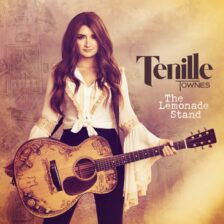
Review: Tenille Townes – The Lemonade Stand

Tenille Townes

The first time I heard Tenille Townes, I knew she was the real deal. Her proper major-label debut release was an all-acoustic EP titled The Living Room Worktapes, and it was a masterpiece. Townes has a strong but unusual voice that conveys depths of empathy and emotion, as well as a talent for crafting songs that ask deep existential questions about what we’re doing here, how we connect with one another, and what the afterlife might look like, among other things. These talents are impressive in any context, but there’s something about hearing them over a sparse acoustic arrangement that makes them all the more jaw-dropping. Listening to The Living Room Worktapes captures the way it feels to hear a complete unknown at an open mic night—just voice, guitar, and unbelievable songwriting—and be absolutely bowled over by their talent. While just four songs long, that release left me with the highest of hopes for what Townes’ career might hold. Here was an artist with Lori McKenna’s talent for storytelling and understanding of the human condition, paired with a Patty Griffin-like voice that could cut you right to the soul.

Read More “Tenille Townes – The Lemonade Stand”

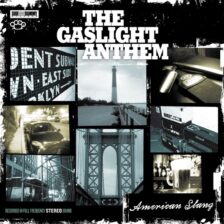
Review: The Gaslight Anthem – American Slang

The first time I ever heard American Slang was in my freshman college dorm room, just a week or two from the end of school, on a gorgeous April spring day. Now, if I’d been a law-abiding listener, the wait to hear the new album from The Gaslight Anthem—their follow-up to 2008’s acclaimed The ’59 Sound—still would have been the better part of two months. American Slang didn’t officially hit the streets until June 15. But 2010 was maybe the golden age of album leaks, and as a broke college student with a budget for little more than gas and the occasional midnight McDonald’s run with my roommate, that fact was very good news for me. It also meant that American Slang, a bulletproof summer soundtrack album, got to serve as the bookend to my first year of college, and to all the anticipation I was feeling as four months of summer approached.

When The ’59 Sound broke in 2008, The Gaslight Anthem quickly became one of the most buzzed-about rock bands in all the circles I was a part of online. Here was a band that respected classic rock traditions and made them sound new again; a band willing to pilfer from their influences in the most loving manner possible; a band whose frontman was, perhaps, worthy of being called “this generation’s Bruce Springsteen.” All that hype only became louder and louder throughout 2009 and into the early part of 2010, which meant that by the time Gaslight announced their new record, excitement for it was through the roof. A title and an album cover that seemed to promise another sweeping classic-rock-styled masterpiece? Well, who could resist that?

Read More “The Gaslight Anthem – American Slang”

Review: Jason Isbell and the 400 Unit – Reunions

Jason Isbell is telling ghost stories.

Sometimes, the things that happen to us in our lives register immediately. Other times, years or decades have to pass for us to fully comprehend how a person or occurrence changed us. Time and experience lend perspective. They give us the wisdom necessary to look back and re-read the pages of our lives, reconvene with our former selves. That’s why reflection is so important, and it’s also why hearing one of our greatest living songwriters look back and commune with the ghosts of his past is so thrilling. Isbell has long been a master of craft: his songs have conveyed the struggles of addiction, the healing and humanizing powers of love, the joys of parenthood. But never before has he captured so thoroughly the bizarre and beguiling feeling of spending a moment inside a memory. On Reunions, by delving into his own past, this master songwriter finds new things to say about experience and identity, and about how the very act of living changes the stories we think are worth telling about our lives. It might just be his greatest album yet.

Isbell has gone on record to say that the songs on this album were things he wanted to write 15 years ago, but there were barriers in his way. “In those days, I hadn’t written enough songs to know how to do it yet,” he said. He hadn’t yet honed his songcraft into the razor-sharp knife it is now. He hadn’t gotten sober, which meant murky nights and hungover days with not enough energy left over to focus on the deeply personal layers he would need to excavate to tell these stories. Perhaps most of all, he hadn’t given himself enough time or distance to understand just how deeply the ghosts in these songs would prove to haunt him. It’s unnerving the way that regrets or papered-over traumas from our pasts tend to worm their way deeper and deeper into the recesses of our minds as years go by. Eventually, you end up alone with your thoughts on some solitary night, with nothing to do but dredge up those specters and let them speak. Reunions is the sonic equivalent of that kind of reckoning.

Read More “Jason Isbell and the 400 Unit – Reunions”

Review: The National – High Violet

The National - High Violet

When The National reemerged in 2010, they were primed to explode. It didn’t matter that they were coming up on their fifth album and had already passed the milestone that marked their first decade together as a band. They were, as people have often described their albums, a slow burn, or a grower, and by the time the new decade began, their fuse was ready to blow. 2007’s Boxer had changed the game for the Cincinnati fourpiece in more ways than one, turning them into prestige indie darlings, landing songs on the soundtracks of virtually every moody drama on television, and even earning them a small but memorable role in the campaign of a presidential hopeful named Barack Obama. By the time The National appeared on Jimmy Fallon in March of 2010 to officially kick off the rollout for High Violet, with a majestic performance of “Terrible Love,” it was clear they were ready to be rock stars.

Read More “The National – High Violet”