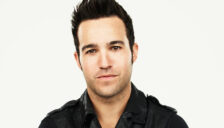
Brian Fallon Talks New Gaslight Album

Gaslight Anthem

Brian Fallon talked with Kerrang about The Gaslight Anthem’s new album:

“Yeah, Autumn. It kicked my butt! Man… I had that opening riff and I had the first line for, like, a year. It was just sitting there, and even before I was gonna get the band back, I had one line and a riff, and I was like, ‘I know this is good, but I just can’t finish it.’ But the only reason I had the first line, god bless her, my little daughter was really frustrated one day, and she goes, ‘Mom! There’s too much traffic in my head!’ And I was like, ‘I’ll be having that!’ I heard it from my room here, and I wrote it down (laughs).”

The End of iTunes?

Kirk McElhearn:

Soon, all that will be left of the iTunes brand is the iTunes Store for music. And people buy much less music [than] in the past, having mostly shifted to streaming. Will the iTunes name finally fade away as music sales dwindle? It’s hard to imagine Apple stopping digital music sales entirely; even if fewer people buy digital music, the market isn’t dead, not by a long shot. Global digital music sales peaked in 2012 at around $4.4 billion, and in 2021 they had dropped to $1.1 billion. That’s a decline of about 75%, but Apple still earns a hefty amount of money from selling digital music.

Spotify Is Changing How It Pays Artists

Billboard:

A new threshold of minimum annual streams that a track must meet before it starts to generate royalties. The threshold, according to MBW, will de-monetize tracks that had previously received 0.5% of Spotify’s royalty pool.

Financial penalties for music distributors and labels when fraudulent activity on tracks they have uploaded to Spotify has been detected.

A minimum play-time length that non-music noise tracks, such as bird sounds or white noise, must reach to generate royalties.

Hayley Williams Talks With Rolling Stone

Hayley Williams

Hayley Williams of Paramore talked with Rolling Stone:

Making This Is Why was not a comfortable experience for any of us. There was already anxiety about getting back in the groove of creating stuff together after some time apart. We were hanging out plenty, but we weren’t making things. Zac was doing Half Noise and I made a couple projects, one with Taylor which Zac played on. Being like, “Okay, we’re gonna go for Paramore,” that was anxiety inducing. And then also the world was still scary and nothing ever feels certain anymore, really. 

I felt a lot of anxiety about being around people again, that weren’t just in my bubble. And knowing that on the other side of finishing the record I was going to enter the world again was really scary. Not because I thought, “I’m gonna catch COVID.” I didn’t get COVID until we started touring again. It was more about what that did to me in my mind. Part of me had gotten really used to just seeing the people that I know, personally, and that I have all this context for — my family, my bandmates, whatever. And now I have to go be around all sorts of people. People that probably don’t feel the same way, or we don’t align politically. I just don’t know how I’m gonna feel. I don’t know what that’s gonna look like. I don’t know if people are gonna like this version of me and/or Paramore. 

YouTube Negotiating With Labels Over AI

YouTube

Lucas Sha, writing for Bloomberg, details the record labels and YouTube negotiating an AI tool that would let people create content using major musicians’ voices:

When YouTube hosted an event for creators in late September, the company unveiled a bunch of new AI-powered tools, including ones for video backgrounds and dubbing.

YouTube had hoped to unveil a tool that would let users perform using the voices of major musicians. Imagine you are an amateur creator uploading a video or a song, and you could sound like Dua Lipa.

Just one problem: None of the major music companies have agreed to participate — at least not yet. Music companies have some questions, and YouTube is still working to supply the answers.

This could be a pivotal moment for the use of AI in the creative industries. For all the fuss about the potential of AI, many of the most-hyped new tools have yet to establish meaningful commercial relationships with artists (aka rights holders). That’s why there are so many lawsuits; nobody has decided how copyright law is going to work in this new(ish) field.

While this is just a test — YouTube wants to try the feature with a little more than a dozen artists — it is still a negotiation between the largest music service in the world and the largest music companies that could result in artists consenting to the use of their work.

Look, I get it, I’m old and not cool and am probably yelling at clouds, but I can’t put into words how much I hate this idea.

Bandcamp Lays Off 50% of Workforce

Bandcamp

The Verge:

In an email to The Verge, Songtradr confirmed that 50 percent of Bandcamp employees have been extended offers to join Songtradr and reaffirmed from a previous statement the company’s commitment to keeping the Bandcamp experience the same.

Songtradr’s statement also confirmed that its purchase of Bandcamp had been completed, but it did not confirm if it would voluntarily recognize Bandcamp’s union that employees won earlier this year, despite pressure from employees and the Bandcamp community.

The union has responded.

Discogs’ Vibrant Vinyl Community Is Shattering

The Verge

Natalie Weiner, writing at The Verge:

Discogs attributed the need to raise fees to its “significant investments in recent years to ensure compliance with various regulatory programs, including tax support and privacy protection.” The company said the change would allow it to “continue to devote resources to maintaining the Discogs Marketplace and develop better tools for collecting, selling, and enjoying music.” 

Many sellers who spoke with The Verge speculated, in line with the viral thread, that the company was trying to pump up its valuation for a potential sale. All of them, though, had the sense that Discogs was trying to increase its profit margins without necessarily offering any improvements to its product in retur

Jack Antonoff Talks with The Face

Bleachers

Jack Antonoff talked with The Face in a new wide ranging interview:

Antonoff says that his motivation, and his process, has rarely wavered since he first began producing; he and his collaborators dream ​“about what a record can be,” and sometimes that results in ​“really transcendent shit” and sometimes it doesn’t. There is no way, he says, to ​“optimise” his process, because there’s no formula. ​“I do think that there’s a misconception about what I do and what pop music is,” he says. ​“There’s a certain group of people who think it’s about appealing to the masses, [which is] not how I feel. I’ve never made anything hoping that everyone would like it.” 

His closest collaborators – like Swift and Del Rey – are people with whom he feels like he can ​“drill even further” into one sound or idea, a feeling he describes as ​“crazy magic”. But the goal is never to top the charts, or appeal to every possible listener. 

“I remember with Norman, Lana wanted to give the mastering engineer her credit card over the phone because she barely wanted anyone to know that the album was being made,” he says. ​“These records are so insular, so it’s a little hard to get it up for someone who has a hot take when [these albums] are reaching the people who they’re intended to reach. It’s cool if you get it and it’s cool if you don’t, but also like, there’s always the option to just shut the fuck up.”

Restaurants, Rest Stops and Red Bulls With Brian Fallon

Brian Fallon of The Gaslight Anthem talks with Paste Magazine about food on the road.

I would always eat the hash browns for breakfast and I would eat the chicken strips and fries. I wouldn’t really go for the burger, it was too messy and tour is a game of tricking the bathroom. You have to be very careful what you eat at night. Because when you’re home, if you wake up in the night and you’re like I have one bathroom, no problem. And when you wake up, barreling down the highway or in an airport, there’s not always a bathroom or there’s a bathroom you don’t want to use

Live Nation Stops Merch Cuts at Clubs

Rolling Stone:

Live Nation is ending merchandise fees for artists at all of its club-sized venues across the country, the company announced Tuesday as part of a new developing-artist program that it has launched with Willie Nelson. 

The “On the Road Again” program, named after Nelson’s famous song, will also give artists playing those venues an extra $1,500 per show intended to help cover growing tour expenses like gas, transportation, and hotels. Live Nation also said it would give unspecified bonuses to crew workers, and the company will contribute another $5 million to the Crew Nation fund it started during the pandemic.

Brian Fallon Talks with NME

Gaslight Anthem

Brian Fallon of The Gaslight Anthem took a quiz about the band for NME and talked about the band’s career and upcoming album:

Was there any other point during The Gaslight Anthem’s break when you considered getting the band back together?

“No, I’d put it pretty far to the back of my mind. We didn’t finish with a Smiths thing where we hated each other, it was more like we didn’t want to make an album that we were embarrassed by later, and it felt like we had entered a lull that every band goes through. People start off loving you, then they hate you, and then they love you again – and it felt like we were in that time where everybody hated us. We thought: ‘Maybe it’s time for us to shut up and make way for some other bands’ [Laughs]. We always knew we’d come back – we just didn’t think it would take nine years.”