Review: Brand New – Science Fiction

Brand New - Science Fiction

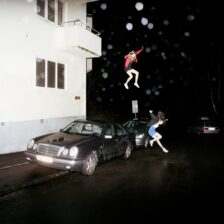
If asked to condense Brand New’s career into one word, that word would be “reactive.” From the title of their second album, Deja Entendu, translating to “already heard” to the abrasive, pedal-infused guitars that dominate their fourth album, Daisy, Brand New have always been a band known to react to critics, fans, and perhaps most importantly, themselves.

For many readers of AbsolutePunk.net (R.I.P.) and now this site, August 17th was a day eight years in the making. It started in typical Brand New fashion with fans receiving cryptic packages in the mail, sparking internet confusion and excitement. This time, however, that package contained the band’s fifth (and presumably final) album, Science Fiction – a fitting goodbye to fans who waited just as long for lyric booklets, let alone a new album. After all, frontman Jesse Lacey has been uncommonly direct about the band’s whereabouts this past year, announcing things like, “We’re done,” at shows, selling shirts predicting the band’s end (2000 – 2018) and even ribbing the band’s bad habits on standalone single “I Am a Nightmare” (“I’m not a prophecy come true/I’ve just been goddamn mean to you”).

Read More “Brand New – Science Fiction”

Review: Barlow – In a Stranger’s Car

Barlow

Barlow is a Pittsburgh-based noise-pop band comprised of three people in their early twenties. Over the past five years, the band has released three full-length albums, a B-sides compilation, three EPs, two splits and two singles in addition to frontman Ethan Oliva releasing a 35-track solo album and 52-track Guided By Voices tribute album – both in 2015. Perhaps most impressive about this observation isn’t the amount of music they’ve released, but the consistency that can be traced all the way back to the band’s beginning. Oliva’s commitment to producing quality music is the stuff of legends and reflects the prolific tendencies of his most obvious influences. With this in mind, the band’s third LP, In a Stranger’s Car, is another success rooted in growth, confidence to explore the darker side of pop songwriting and pedalboards that would make Kevin Shields blush.

Those new to the band may instantly recognize the four-track production that marked much of college and indie-rock in the 90s, and there’s a skillful use of dissonance between the crackling of cassette tape and the band’s bubblegum melodies that’s always played to their advantage. That is no less evident here as opener “Tirebiter” lets its squealing, distorted guitars take hold of the track and never let go. These same guitars are evident during the album’s most eclectic standout, “You Have to See It,” which splits its time equally between an aggressive, blown out chorus and delicate, eerie verses that reflect the album’s artwork. Also highlighted are the album’s longest tracks, single “False Eye” and closer “Time Man.” The former, Oliva’s self-professed favorite Barlow track, plays like a greatest hits experience in four minutes, explosive in the way it changes directions and executes several of the band’s trademark sounds.

Read More “Barlow – In a Stranger’s Car”

Review: Matt Nathanson – Some Mad Hope

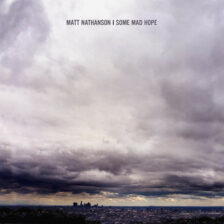
Few albums sound more like growing up to me than Matt Nathanson’s Some Mad Hope. Last year, for my 26th birthday, I wrote a blog post where I chose one defining song from every year I’ve spent on the planet. “Car Crash,” the opening track from Some Mad Hope, was my pick for 2007. For me, that song—and this record in general—marked the end of youthful innocence and the beginning of something a little more complex and a little less black and white. It’s tough to imagine a better record for that moment in life than Some Mad Hope, which effortlessly pairs pop hooks and anthemic arrangements with emotionally weighty lyrical work. What is tough to process is the fact that this record—the one that marked the start of my journey from youth to adulthood—is now 10 years in the rearview.

Some Mad Hope would prove to be Matt Nathanson’s breakthrough, but it wasn’t his first record. On the contrary, in Nathanson’s catalog, Some Mad Hope holds the status of being the sixth LP. He’d moved the needle slightly in the past. His cover of the James hit “Laid” opened American Wedding, the final film in the initial American Pie trilogy, and his fifth album, 2003’s Beneath the Fireworks (produced by future Springsteen collaborator Ron Aniello) spawned reasonably well-known tracks like “I Saw” and “Curve of the Earth.” But until this record, Nathanson tended to be known as an artist who put on a fantastic live show, but could never quite translate the energy and fun of his concerts into compelling studio records.

Read More “Matt Nathanson – Some Mad Hope”

Review: Tyler Childers – Purgatory

Earlier this year, when Canadian country singer Colter Wall released his self-titled debut record, it felt like someone had caught lightning in a bottle. How was it possible that this young, 21-year-old kid could produce the kind of booming, haunting baritone voice he sang with? How could he get closer to sounding like Johnny Cash than anyone in Nashville, when he’d only been seven years old when Cash passed away? It felt like Wall had the kind of once-in-a-generation voice that was going to make him a country music legend. And then you got to the penultimate track, a take on the old German folk song “Fraulein,” and heard another breathtaking voice stealing the show.

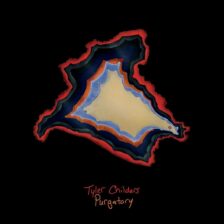
That voice belonged to Tyler Childers, an unheralded (at least until now) singer/songwriter hailing from the state of Kentucky. Like Wall, Childers is young. He’s 26 now and has been touring the southern and midwestern United States since he was 20. But Childers doesn’t have Wall’s cavernous baritone voice. Instead, he’s got a gritty, versatile tenor, equally adept at selling loud honky tonk rave-ups and tender, lovelorn ballads. It begs the question: what kind of deals with the devil did these two young troubadours have to strike to get such distinctive instruments so early in their lives? And if country music has these kinds of remarkable young talents hiding around the fringes, then why the hell are we putting up with nothing vocalists like Jason Aldean and Thomas Rhett?

Read More “Tyler Childers – Purgatory”

Review: Manchester Orchestra – A Black Mile To The Surface

Manchester Orchestra - A Black Mile to the Surface

Before recording anything for Manchester Orchestra’s fifth album, Andy Hull aimed to deconstruct what the band was. “My challenge was whatever you’re instinctively going to want to play on the record, try and not do that,” Hull explained to UPROXX earlier this summer, “try and do the opposite of that thing.” Obviously, there isn’t anything like a simple “how-to” guide on achieving such a goal, so the band worked with multiple producers at various studios to create a record that could cement their legacy as one of this era’s great rock bands. And after a year full of obsessive detail, second guessing, and a grueling recording process, Manchester Orchestra emerged with A Black Mile To The Surface, their most majestic and challenging record yet.

Read More “Manchester Orchestra – A Black Mile To The Surface”

Review: Arcade Fire – Everything Now

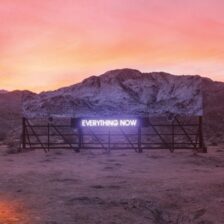
When Arcade Fire won the Album of the Year Grammy for The Suburbs, it felt like the beginning of something. Six years on from Funeral, the record that made the band torchbearers of the critically acclaimed indie rock scene, here they were, finally being recognized on the big stage. The records they beat—pop juggernauts from Katy Perry, Eminem, Lady Gaga, and Lady Antebellum—were all more indicative of what the radio sounded like in 2010. But Arcade Fire’s victory showed that, maybe, the pop world was finally ready to embrace something darker and more nuanced. Maybe they were ready to let a rock band back into the fold.

Looking back now, the Grammy win feels more like the end of something. Future Grammy winners didn’t sound or look much like Arcade Fire. Neither did radio stars. Instead, on 2013’s Reflektor, Arcade Fire started looking (and sounding) a lot like the pop insiders. Just like most of the other marquee acts that released albums that year—Daft Punk, Justin Timberlake (x2), Jay-Z, Eminem, Katy Perry, Lady Gaga—Arcade Fire made it clear that they were going for a capital-B Blockbuster. The rollout was excessive and overblown; the album was long and ambitious; the hype stretched on for months. And the songs…well, they didn’t have that much to offer, at the end of the deep, deep rabbit hole that Arcade Fire dug for fans. Writing for Grantland, Steven Hyden called 2013 “The Year Music Failed to Blockbust.” He wasn’t wrong, and Arcade Fire was at the center of it.

Read More “Arcade Fire – Everything Now”

Review: Pet Symmetry – Vision

The best albums are the ones that challenge you the most and, for the past month, Pet Symmetry’s Vision has truly been a challenge for me.

It’s not that I didn’t like it, or that it needed to grow on me. It’s that there’s quite a bit to unpack, despite the fact that the album is only 11 songs and 30 minutes long. I’ve started and re-started this review more times than I care to admit, because each listen through left me with more to say than I knew what to do with.

Though it’s a quick listen, Vision never once feels short or stunted, or like there might be something missing. On the contrary, Pet Symmetry’s songs feel complete in what is often an unusually brief amount of time.

Read More “Pet Symmetry – Vision”

Review: Captain, We’re Sinking – The King of No Man

Captain, We're Sinking

Captain, We’re Sinking’s The Future Is Cancelled was one of the most impressive punk albums in recent memory. It’s a tense listening experience, as songs burst and crash with little warning; vocalists Bobby Barnett and Leo Vergnetti jumped between near-inaudible whispers and throat-damaging howls at the drop of a dime, singing harrowing stories of depression, alcoholism, and suicide. It all felt spontaneous, necessary.

The King of No Man feels a bit more rehearsed. Where before the band had more jagged edges, they’ve smoothed them over. Instead of finding catharsis through ragged shouting as on The Future, No Man finds it in quieter moments, to varying effects. Opener “Trying Year” ushers this new era of Captain, We’re Sinking in appropriately, pumping the brakes every time one would think Barnett’s getting ready to let loose (although he or Vergnetti does sneak a pretty impressive guitar solo in there). “Hunting Trip” is a slowburn comparable to “A Bitter Divorce” with a less intense payoff, finding Barnett singing the song’s climactic final lines over a clean guitar line. It feels a bit toothless in the end, like there should’ve been a little more push to end out the song, and it sort of sputters out rather than exploding. Then there’s “Dance of Joy,” a bizarre, drum-led song that would never fit on The Future Is Cancelled. It’s weird to even think the same band wrote this song and “Shoddy Workmanship,” but it ends up being one of the album’s highlights, due in good part to Vergnetti’s powerful vocal performance.

Read More “Captain, We’re Sinking – The King of No Man”

Review: Tigers Jaw – Spin

Tigers Jaw - spin

When you consider the last three or four years of Tigers Jaw’s career, spin feels a like an apt title for the band’s fifth album. After the original quintet recorded and released 2014’s stellar Charmer, the band is officially the duo of Ben Walsh and Brianna Collins. And with that foundation firmly in the ground, Tigers Jaw have released their strongest album to date in spin. Working with producer Will Yip once again – and backed by his new Atlantic Records imprint Black Cement – spin is a twelve track adventure consisting of a terrific blend of indie-pop tracks, as Collins joined Walsh with the songwriting duties. The result is stronger hooks, sweeter melodies, and an album that ascends Tigers Jaw to the very top amongst their peers.

Read More “Tigers Jaw – Spin”

Review: Cigarettes After Sex – Cigarettes After Sex

Cigarettes After Sex

I was starting to get nervous about Cigarettes After Sex. Their debut EP, I., had picked up some steam when it was released – in 2012. Sure, they’d released a couple singles here and there, but without any word of an album, or even an EP, I got a little bit disheartened. Cut to present day and Cigarettes After Sex are releasing their self-titled debut and it’s everything I could have wanted out of a follow-up to I. The album picks up up exactly where the EP left off, offering up ten tracks of melancholic, languid indie rock.

Read More “Cigarettes After Sex – Cigarettes After Sex”

Review: Jason Isbell and the 400 Unit – The Nashville Sound

“Last year was a son of a bitch for nearly everyone we know.” So Jason Isbell proclaims in the middle of “Hope the High Road,” the resilient lead single from his brand new LP, The Nashville Sound. It’s something of a mission statement for the record, which is very much informed by 2016’s shit storm of political division and deep-seated anger. However, that lyric only gains its resonance from the line that follows it: “But I ain’t fighting with you down in the ditch, I’ll meet you up here on the road.” Being pissed off and dwelling on everything that went wrong last year might feel good, but it isn’t productive. Looking forward and striving to do better and be better is what’s necessary to effect change.

As a lead single, “Hope the High Road” is not indicative of what this album sounds like. It’s bright and anthemic where much of the record is dark and jagged, opting for Springsteen-style uplift instead of following the record’s lead of addressing all those nagging thoughts that you don’t want to talk about at parties. However, the message of the song—that maybe it’s a good idea to take a look inward instead of casting blame for once—is what gives the LP its beating heart. The Nashville Sound is the third masterpiece in a row from Isbell, and it gets there by never giving easy answers to the hard questions.

Read More “Jason Isbell and the 400 Unit – The Nashville Sound”

Review: The Steel Woods – Straw in the Wind

Southern rock often goes overlooked in mainstream or music criticism circles, which is why bands like The Steel Woods will probably never have the widespread followings they deserve. Bands of this ilk either get lumped in with country (and subsequently written off by people who don’t like country) or compared endlessly to Lynyrd Skynyrd and The Allman Brothers Band, as if no southern rock bands have existed since. But the past few years have been nothing but healthy for southern rock, bringing great albums from new artists (A Thousand Horses, Whiskey Myers, Cadillac Three, Blackberry Smoke) and old standbys alike (the ever-reliable Drive By Truckers). Even Chris Stapleton has more than a little bit of the southern rock sound in his DNA.

The Steel Woods add their name to that list with their stellar debut album, the recently-released Straw in the Wind. Blending influences from half a dozen genres—including blues, gospel, down-home country, rock ‘n’ roll, and even a little dash of metal—The Steel Woods sound more seasoned, versatile, and assured on this sprawling 13-song collection than you would normally expect from a debut act. (Though they do have a previous four-song EP under their belt.) The band’s wheelhouse is dark, atmospheric rock ‘n’ roll, like the slow-burning opener “Axe” or the gospel-tinged “Let the Rain Come Down,” a song that appeared in a more acoustic-oriented arrangement on last year’s debut album from singer/songwriter Brent Cobb. Foreboding and thrilling, these songs carry an almost apocalyptic glint to them, which makes for a hell of a lot of fun.

Read More “The Steel Woods – Straw in the Wind”

Review: Manchester Orchestra – A Black Mile to the Surface

Manchester Orchestra - A Black Mile to the Surface

This first impression was originally posted as a live blog for supporters in our forums on June 9th, 2016. First impressions are meant to be quick, fun, initial impressions on an album or release as I listen to it for the first time. It’s a running commentary written while listening to an album — not a review. More like a diary of thoughts. This post has been lightly edited for structure and flow.

Why hello there.

Ever since the album showed up in my inbox, this has been probably the most requested “first listen” blog yet. I was waiting until the embargo ended to talk and write about this one in more detail, and with the announcement and single release today … I figured I might as well just kick this one out right now! The album is out in about a month and a half, so it’s not super early, and this will also allow me to come back to this thread in the next month and add new thoughts as I continue to listen and grow with this album.

Read More “Manchester Orchestra – A Black Mile to the Surface”

Review: Beach Fossils – Somersault

Earlier in May, I wrote about Mac DeMarco’s new album This Old Dog, concluding that it was “his best and most mature album to date.” This is relevant because, generally speaking, This Old Dog isn’t much different from any other Mac DeMarco album. Sure, the songs are more polished and his production has shifted to put more on the personal singer-songwriter aspect of the album, but these are relatively small revolutions in what has ultimately become the trademark Mac DeMarco sound. Put simply, This Old Dog is just more of what Mac DeMarco does best, done better than before.

This is one way to do things.

Other times, a “good” artist who has historically released “good” albums reaches a critical point in their career: here, they must decide whether to remain stagnant or let loose. And sometimes, a band that chooses the latter ends up releasing their best album yet.

This is the another way to do things, and this is what Beach Fossils have done with their third LP, Somersault.

Read More “Beach Fossils – Somersault”