Review: Thrice – Beggars

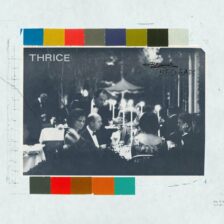
Thrice Beggars

The praise and allure surrounding the seventh studio album from Thrice is one that I initially didn’t fully grasp at my first listen, nearly ten years ago to the day. Maybe I was in a bad mood that day or was distracted during my listening experience, because as I revisit Beggars now, I can’t fathom how I would have felt anything but pure astonishment and wide-eyed wonder at this pre-hiatus masterpiece by the California rockers. Beggars was released digitally a full month before the physical release date of September 15th, 2009, which gave eager fans a chance to absorb the new sounds from Thrice before rushing out to their local record store the month after. From songs as immediately gratifying as “All the World is Mad” to the progressive-rock elements of “Circles,” Beggars had a little bit of everything from all phases of Thrice’s expansive discography. The self-produced record (with a specific and well-deserved credit to lead guitarist Teppei Teranishi) is a wonderful snapshot of what the band was capable of making when firing on all cylinders.

A look back at this record brings back many emotions for me from hearing these songs live as recently as their spring tour, and now that I have the foresight of seeing where Thrice would eventually take their sound, one can’t help but praise this album as being one of their best.

Read More “Thrice – Beggars”

Review: Red Hot Chili Peppers – Californication

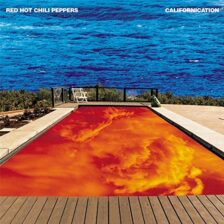
Red Hot Chili Peppers - Californication

My memories surrounding the seventh studio album from the Red Hot Chili Peppers are flooded with great moments spent with this classic, late-90’s record on many Summer evening drives back and forth from the beach. Californication came at a time when my sixteen-year-old self was rapidly veering away from the pop that was dominating the airwaves of the radio, and I vividly remember when I purchased a CD copy of this album that I still hold in such high esteem to this day. As I look back on the 20th anniversary of this classic, I remember how I was immediately drawn into the world the band was describing in ways I never thought that I could be. I was transformed within an album from the very first notes. While my younger self may not have fully grasped all the themes that were being tossed around in the lyrics such as: death, suicide, globalization, and traveling, I could still appreciate every ounce of blood sweat and tears that the band had put into the classic LP.

Read More “Red Hot Chili Peppers – Californication”

Review: The Dangerous Summer – Reach for the Sun

It’s funny the way that albums can mark time. How hearing the right songs at the right moment can make them sound like more than songs, or how going back to those songs after 10 or 15 or 20 years can reawaken every feeling you had when you first heard them. It’s funny, too, how the music that does those things to you might not do anything for anyone else. How something can be an incredibly meaningful and important document of your past, but just sound run-of-the-mill to someone else. Or how, if you’d heard an album a decade or a year or six months too early or too late, it might just be a footnote in your musical history rather than a symphony.

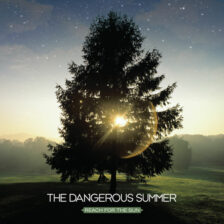
No album has ever taken me more by surprise than The Dangerous Summer ‘s Reach for the Sun. I didn’t see it coming, and I wasn’t looking for it. I had no knowledge of the band or their past work, no clue what they sounded like or what their songs might have to say about my life. I just read a rave review of the album one day on AbsolutePunk and decided to give it a shot. Ten years later, those songs still shoot shivers down my spine and choke me up, because they sound like the cusp of adulthood, and like all the friends and memories I’ve left behind in the past decade.

Reach for the Sun had remarkable timing. Its release date was May 5, 2009, just as spring was bursting into full, glorious bloom. I first heard it on May 3, in the early evening, coming out of old boombox speakers in my bedroom, with the gentle glow of the sunset streaming through my window. The day before, my sister had graduated from college. In another month, I’d graduate from high school. My parents and I had driven home, from Ann Arbor to Traverse City, that afternoon. I had a boatload of calculus homework to do and was dreading the evening. AP exams were just days away, and I needed to buckle down and focus. Certainly, I knew I needed a good soundtrack for the study session. So I downloaded this record on the recommendation of a glowing 95 percent review from Blake Solomon and loaded it onto my iPod.

Read More “The Dangerous Summer – Reach for the Sun”

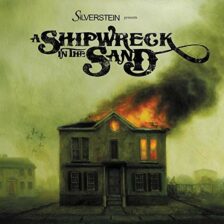
Review: Silverstein – A Shipwreck in the Sand

Looking back on the tenth anniversary of Silverstein’s fourth studio album, A Shipwreck in the Sand, is an interesting project and it in many ways is a snapshot of the state of the world we were living in. Coming off a slightly commercially and critically disappointing third album in Arrivals & Departures, the band felt a sense of urgency to deliver a great record. Silverstein turned once again to the Discovering the Waterfront producer, Cameron Webb, to help them create an early-career landmark album in their discography. The themes of betrayal, loss, war, and the problems with the US health care system are prevalent throughout this LP. Self-described by the band as being one of their “heaviest” records in their career, this album takes us on a four chapter journey in the form of a captivating concept record.

Read More “Silverstein – A Shipwreck in the Sand”

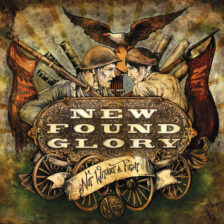
Review: New Found Glory – Not Without a Fight

New Found Glory - NWOAF

When New Found Glory broke into the mainstream in the early 2000s, it certainly wasn’t amongst a shortage of pop-punk bands. The post-Blink boom meant that for a few years, every bunch of spiky-haired kids in Dickies was getting picked up by a major and amassing radio and MTV coverage. But what always set New Found Glory apart from their Warped Tour ilk was their genuine connection to heavy music. A teenaged Chad Gilbert was the vocalist for metalcore legends Shai Hulud before he was New Found Glory’s guitarist, and where other pop-punk bands of the time were taking influence from the likes of Descendents and Screeching Weasel, NFG were drawing more from East Coast hardcore like Madball and Snapcase. They positioned NYHC guitar tones as the backdrop to sickly-sweet pop vocals, and mastered both elements better than any of their peers could.

This distinction set New Found Glory up for longevity that outlasted pop punk’s commercial day in the sun, and such longevity makes inevitable – and perhaps relies on – a change in course. So in 2006, while bands like Midtown and Fenix TX had dissolved around them, New Found Glory released their fifth album Coming Home. It swapped the crunchy riffs for mid-tempo soft rock more comparable to, say, Journey than to their heavy early influences. It was a smart move, with pop-punk by now commercially dead in the water as emo-pop took its place, and one that paid off too; it was likely better received critically than any of their records prior.

Read More “New Found Glory – Not Without a Fight”

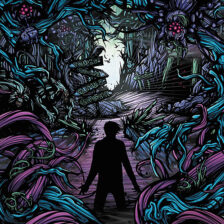
Review: A Day to Remember – Homesick

For as long as I can recall, A Day to Remember have been that strange mixture of incredibly divisive and inarguably popular within the scene. Being a (female) ADTR fan in 2009 looked like this: If people (let’s be real; mostly men) weren’t calling you “soft” for liking the band to begin with, they were heavily implying that you only liked the ~pretty~ tracks, like “If It Means a Lot to You” or “Have Faith In Me” (which are both bangers, by the way). The band apparently were too hardcore for the pop punk bros, and too pop punk for the hardcore kids. To put a finer and entirely subjective point on that observation: then as now, both the pop-punk and hardcore purists were enraged by a band that refuses to call themselves either, yet excels at both. When Homesick dropped ten years ago, I was a senior in high school. While they weren’t my absolute favorite band, they were up there. I wasn’t writing about music yet at the time, but I loved the record. Upon listening as a fully formed adult ten years later, my opinion remains largely unchanged.

Read More “A Day to Remember – Homesick”

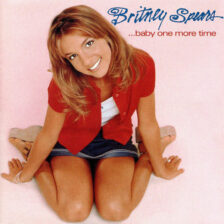
Review: Britney Spears – …Baby One More Time

Britney Spears - ...Baby One More Time

On January 12, 1999, Britney Spears hit the music scene with …Baby One More Time. Boy bands, Britney Spears, and company ruled the late 90s and early 2000s with their music. The title track dropped in October 1998, which gave fans a taste of what to expect. It also helped blast Britney into her celebrity status. It’s the only track I can imagine having such a big impact from the get-go. Wouldn’t it have been odd for them to have the lead single be literally any other song on the album? That’s sure how it feels now, anyway.

Read More “Britney Spears – …Baby One More Time”

Review: The Killers – Day & Age

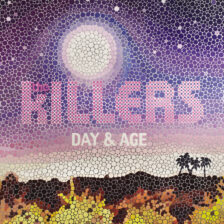
I believe “What the hell happened?” was my first reaction upon hearing Day & Age, the third album from The Killers, for the first time. This record didn’t compute for me. It was bizarre and misshapen, a mess of ideas that never coalesced into anything that made sense as a unified work of art. It sounded to me, on first listen, like a B-sides record. If The Killers hadn’t released an actual B-sides collection just a year before, I might have wondered if the band just gotten lazy and pulled out some ideas they’d shelved for earlier records. But apparently Day & Age was the statement the band really wanted to make at that time, and what an odd statement it was.

Read More “The Killers – Day & Age”

Review: Butch Walker – Sycamore Meadows

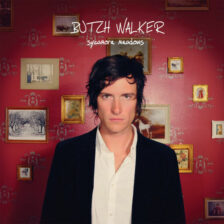
Few albums can put a smile on my face as quickly as Sycamore Meadows.

That’s probably an odd thing to say, since Sycamore Meadows is not, by most metrics, a happy album. Butch Walker’s fourth solo LP was birthed in part from the California wildfires that destroyed his home, most of his possessions, and the master tapes for every song he’d ever recorded up to that point. The songs catalog breakups, painful journeys of self-discovery, and the record business being irreversibly fucked. The album’s last track is a sobering piano ballad that bears one of the most emotional vocal performances Butch ever put on tape.

And yet, Sycamore Meadows still makes me smile.

Read More “Butch Walker – Sycamore Meadows”

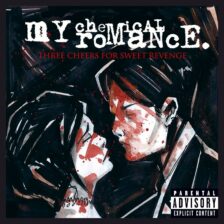
Review: My Chemical Romance – The Black Parade

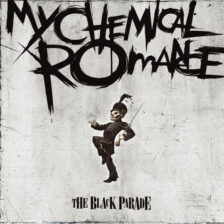
The Black Parade

Let me preface this My Chemical Romance retrospective by stating that they are my favorite band, and I still hold The Black Parade as one of my top-5 favorite albums ever recorded. Throughout My Chemical Romance’s career, I was astounded by their rise to fame, and having seen them go as the first opening band on tour with The Used, to headlining stadiums by the time The Black Parade reached its heights, and I have marveled at the lore and theatrics surrounding my favorite artist.

Read More “My Chemical Romance – The Black Parade”

Review: Death Cab For Cutie – Transatlanticism

Death Cab for Cutie

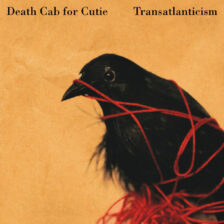
Transatlanticism is my favorite album of all time. Death Cab For Cutie’s fourth album, released fifteen years ago today, is the band’s second concept album. Transatlanticism centers itself around long-distance love, with both its strengths and downfalls. Ben Gibbard, the band’s soft-sung lead vocalist, lyricist, and guitarist, penned the term “transatlanticism” to express the unfathomable emotional space between two young lovers. The distance Gibbard discusses feels impenetrable. Transatlanticism sees Death Cab For Cutie experimenting with soft-loud dynamics (“Transatlanticism”, “We Looked Like Giants”), perfecting the gorgeous quiet track (“Lightness”, “A Lack of Color”), and witnesses them pushing themselves to go all-out and produce the flawless pop song (“The Sound Of Settling”). Completing all of this is the efforts of guitarist, co-writer and producer Chris Walla. Walla’s lo-fi production is perfect for Transatlanticism. Fifteen years later, and Transatlanticism still sounds incredibly rich and indulgent, yet also warm and intimate.

Read More “Death Cab For Cutie – Transatlanticism”

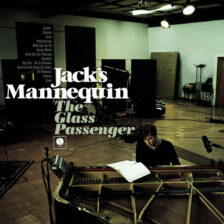
Review: Jack’s Mannequin – The Glass Passenger

“Even if your voice comes back again/Maybe there’ll be no one listening.”

The morning I climbed into my car to drive myself to the first day of my last year of high school, those lyrics punched me straight in the gut. I was reeling from a broken heart, given to me by a girl who’d occupied my mind all summer long. A few months earlier, she would have been walking the same high school halls that I was driving toward that morning. But she’d graduated and was now two hours south, probably waking up for her first day of college classes. Things hadn’t worked out between us, and if I’d been smart, I would have realized three months earlier that they were never going to. I didn’t, and now I was nursing a few fresh wounds and the prospect of facing down one last year of high school without her and without all the other friends who had left this town behind. “Crashin” was the song playing on the stereo, but it was a line from Andrew McMahon’s previous album that might have been most appropriate: “Hold on/It’s gonna be a hard day.”

Read More “Jack’s Mannequin – The Glass Passenger”

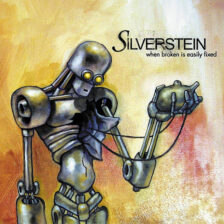
Review: Silverstein – When Broken Is Easily Fixed

Silverstein

Looking back 15 years from Silverstein’s debut album is an interesting experiment, now knowing all of the great work they have put forth since. When Broken is Easily Fixed was a compilation of the band’s early EPs, Summer’s Stellar Gaze (2000) and When the Shadows Beam (2002), that were re-recorded for Victory Records under the tutelage of producer Justin Koop. The LP itself went on to sell over 200,000 units, far surpassing any expectations.

I first discovered Silverstein when my college roommate told me I needed to check out this new band on Victory Records named after a children’s book author (Shel Silverstein). That first song he played for me was “Bleeds No More.” I was immediately drawn into the aggressiveness of the track, from the dual-guitar attack of Neil Boshart and Josh Bradford, to the carefully placed screams of Shane Told, the track just clicked. Then as I began to investigate the other songs on When Broken is Easily Fixed, I became drawn to songs such as “Red Light Pledge” and “Wish I Could Forget You,” each with their own personalities and intricate guitar work, precise drumming, and incredible hooks. I really appreciated what Silverstein was aiming for on this release, and I knew that this band in particular was going to do something great in their career.

Read More “Silverstein – When Broken Is Easily Fixed”

Review: The Gaslight Anthem – The ’59 Sound

Gaslight Anthem - 59 Sound

Over the course of the past 10 years, few albums from the 2000s have stuck with me quite like The ’59 Sound. One of the undeniable truths of being a consummate life soundtracker is that most of your favorite albums end up being inextricably linked to certain periods of time. You play those records so much when they’re new to you that they become a collage of moments and memories from your life. It’s a beautiful thing when that happens, but it also tends to mean your favorite LPs eventually fall out of regular rotation, as you reach for new music to play that role for new moments and memories. Most of my favorite albums fit into this category. My other 2008 classics—records like Butch Walker’s Sycamore Meadows and Jack’s Mannequin’s The Glass Passenger—are albums I revisit only every month or two, not because I don’t love them, but because they hold so many pieces of my past self within their songs. Those albums could never be life soundtracks to me today, because they already played that role at such vivid and crucial junctures of my life.

The ’59 Sound is different. It’s the rare “favorite record” in my life that isn’t tied to any one specific moment or season or year. It’s a record that has grown with me over time, one that has meant a dozen different things to me from one year to the next. Where other records I loved back then have drifted more into the background, The ’59 Sound is a record I’ve played regularly—probably once every couple weeks, at least—for the better part of the past decade. A part of the reason is probably my initial indifference to the album. The ’59 Sound got a lot of hype in 2008, but my first listens told me it was something dated and backwards-looking: songs stuck in the past that didn’t have relevance to my present. (Note: this opinion is my worst first impression of all time.) Because I was never infatuated with this album like I was with many of the LPs that came out around the same time, I never “wore it out” in the same way.

Read More “The Gaslight Anthem – The ’59 Sound”

Review: Bruce Springsteen – Darkness on the Edge of Town

Born to Run was the album that sparked my appreciation for Bruce Springsteen’s music, but Darkness on the Edge of Town was the album that made me a fan.

In 2015, when Born to Run turned 40, I wrote about the day I fell in love with it. A chance discussion about Springsteen at a family reunion sent me reaching for the Bruce albums on my iPod the next day, as my family traversed an epic snowstorm to drive back home. I had five Bruce records on my mp3 player, but I’d never really given full attention to any of them. They were all records from my parents’ CD collection, and at the time, I still stupidly believed (perhaps self-consciously) that older music couldn’t be my music in the same way as something released in my lifetime.

On that snowy drive home, I cycled through the Bruce albums on my iPod: the bombastic, optimistic dream of Born to Run; the scrappy underdog symphony of Greetings from Asbury Park; the deeply ‘80s-sounding Born in the U.S.A.; the resilient recovery rock of The Rising; and the sparse storytelling of Devils and Dust. I loved Born to Run immediately. I liked The Rising a lot, too. I had trouble getting over how dated Greetings and Born in the U.S.A. sounded to my ears at the time, but I liked the songs. And Devils was fine, but mostly didn’t move me.

Read More “Bruce Springsteen – Darkness on the Edge of Town”